
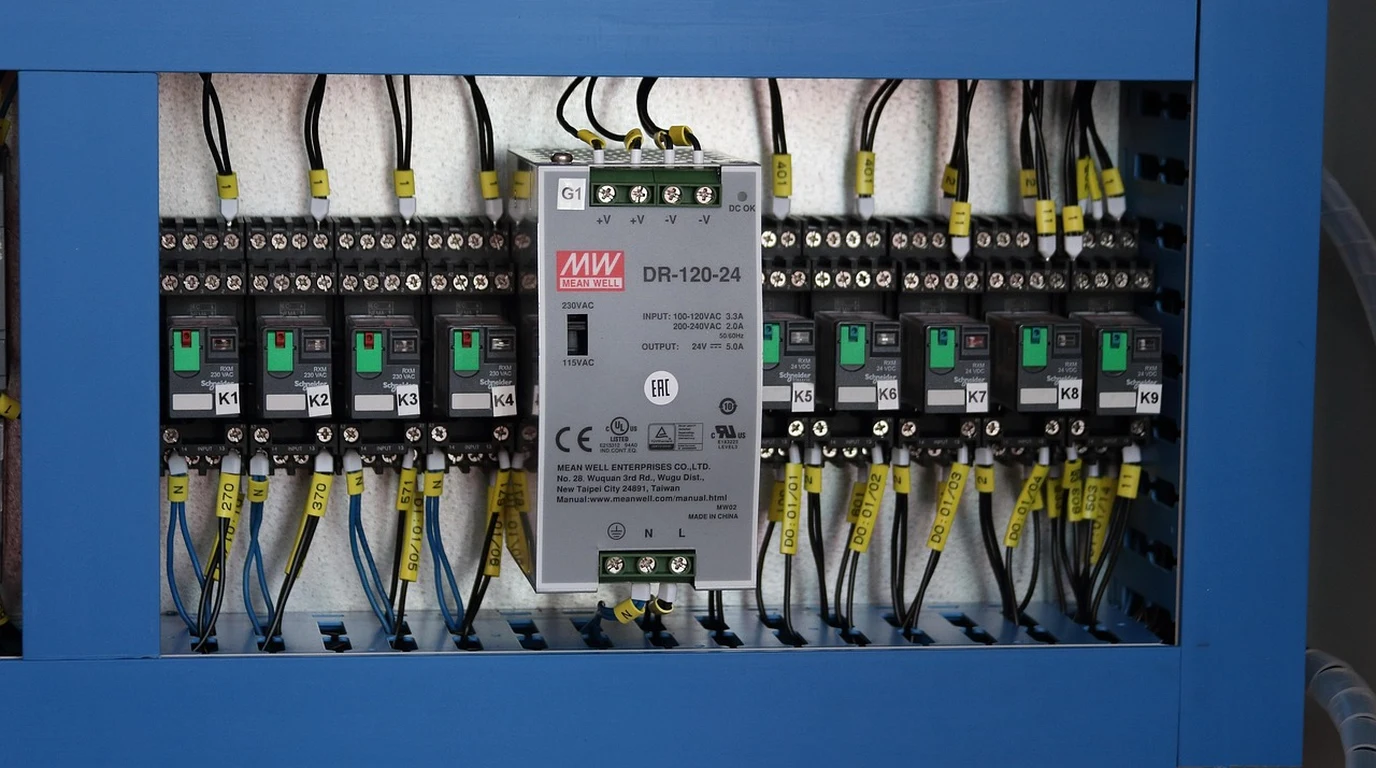
The sheer weight of choice in commercial smart home automation can feel like navigating a minefield blindfolded. You’re not just selecting a system; you’re laying the foundational infrastructure for a client’s business operations, their energy efficiency, their comfort, and their long-term peace of mind. Get it wrong, and you’re looking at costly rework, frustrated clients, and a dent in your reputation. The stakes are undeniably high: a robust, future-proof solution can unlock significant operational savings and enhance property value, while a misstep can lead to vendor lock-in, integration nightmares, and an automation system that’s obsolete before its time. You’re seeking clarity, a definitive guide to cut through the marketing noise and provide a truly authoritative perspective on two of the most prominent players: KNX and Loxone. You need to know which path leads to commercial success, not just for today, but for the next two decades.
For commercial smart home automation demanding unparalleled long-term flexibility, multi-vendor choice, and robust decentralization, KNX is the gold standard. It’s ideal for large, complex projects prioritizing future-proofing and vendor independence. Loxone excels in projects prioritizing rapid deployment, a tightly integrated ecosystem, and a streamlined user experience, provided its proprietary nature aligns with the client’s long-term strategy and the project scope remains within its native capabilities.
Why is Choosing the Right Smart Home Backbone So Critical for Commercial Projects?
When you’re designing automation for a commercial space – be it an office building, a hotel, a retail complex, or a multi-unit residential development – you’re not just installing gadgets. You’re engineering an ecosystem that must deliver reliability, scalability, and maintainability over a lifecycle far exceeding typical consumer electronics. The “costly trap” many fall into is underestimating the long-term implications of their initial architectural choice. They focus too heavily on upfront hardware costs or the immediate ease of configuration, neglecting the true total cost of ownership (TCO), the risk of vendor lock-in, and the system’s ability to adapt to future technological advancements or changing business needs.
Imagine a scenario where a client invests heavily in a system, only to find five years down the line that a critical component is no longer manufactured, or that integrating a new, essential subsystem requires a complete overhaul due to proprietary limitations. This isn’t just an inconvenience; it’s a significant financial burden and a operational headache. The decision between KNX and Loxone, therefore, isn’t merely about features; it’s about architectural philosophy, long-term viability, and the strategic alignment with your client’s business objectives.
Understanding the Core Philosophies: KNX’s Decentralized Power vs. Loxone’s Centralized Agility
At their heart, KNX and Loxone represent two fundamentally different approaches to building automation. Grasping these core philosophies is paramount to making an informed decision.
KNX: The Open, Decentralized Standard
KNX operates on an open, decentralized fieldbus standard (EN 50090 / ISO/IEC 14543). Think of it as a universal language spoken by over 500 global manufacturers. Every KNX device – be it a light switch, a motion sensor, a dimmer, or an HVAC actuator – contains its own microcontroller and intelligence. These devices communicate directly with each other over a dedicated twisted-pair green bus cable (TP-1), or via IP, RF, or powerline.
The beauty of this architecture is its inherent resilience. There’s no central controller that, if it fails, brings the entire system down. If one device malfunctions, the rest of the system continues to operate unimpeded. This distributed intelligence means that the system’s functionality is spread across all its components, creating a robust, fault-tolerant network. Configuration is handled by the vendor-neutral ETS software, allowing you to mix and match devices from different manufacturers, ensuring unparalleled flexibility and preventing vendor lock-in. This is a system designed for multi-decade interoperability, where a KNX sensor installed today will communicate flawlessly with an actuator manufactured 25 years from now.
Loxone: The Centralized, Integrated Ecosystem
Loxone, by contrast, employs a centralized automation architecture. Its brain is the Loxone Miniserver, a proprietary controller that manages all inputs and outputs. Devices connect to the Miniserver via various proprietary Loxone technologies: the Tree Bus (a dedicated wired bus), Loxone Air (proprietary wireless), or via digital/analog extensions.
The strength of Loxone lies in its tightly integrated software ecosystem. The Loxone Config software provides an intuitive graphical interface with native logic blocks, enabling rapid configuration and commissioning, especially for standard automation tasks. The Loxone App offers a highly polished and user-friendly experience. This centralized approach allows for powerful, complex logic to be executed within the Miniserver, offering a cohesive and often quicker path to a functional system. However, this agility comes with a trade-off: you are inherently locked into the Loxone hardware ecosystem. While Loxone offers various gateways for integrating third-party systems, the core intelligence and control reside solely within the Miniserver and its proprietary extensions.
Navigating the Vendor Lock-in Labyrinth: Long-Term Implications for Your Projects
This is where many practitioners get it wrong. They see the immediate benefits of a system without fully appreciating the long-term strategic implications of vendor lock-in.
With KNX, vendor lock-in is virtually non-existent at the core system level. Because it’s an open standard, you’re free to choose from hundreds of manufacturers for every component. If Manufacturer A stops producing a specific type of sensor, you can simply procure an equivalent from Manufacturer B, C, or D, and it will integrate seamlessly into your existing KNX bus. This multi-vendor environment fosters innovation, competitive pricing, and, most importantly, guarantees the long-term availability of components and support. Your client’s investment is protected by an industry-wide standard, not by the fortunes of a single company. This is especially critical for commercial projects with expected lifespans of 10, 15, or even 20+ years.
Loxone, while offering a fantastic user experience and a highly integrated development environment, is a proprietary ecosystem. Your entire automation logic and hardware are tied to Loxone. While Loxone is a robust and innovative company, relying on a single vendor for all core components carries inherent risks. Should Loxone discontinue a product line, change its core architecture, or even cease operations, your options for repair, expansion, or replacement become limited to what Loxone provides or what can be bridged via complex third-party integrations. For a commercial client, this can translate into significant future costs if they need to adapt or expand their system beyond Loxone’s native capabilities or if components become obsolete. The agility gained in initial deployment can be offset by potential rigidity and dependency down the line.
Wiring Topologies: Distributed Bus Cabling vs. Star-Wired Home Run Actuator Panels
The physical wiring infrastructure is another critical differentiator, impacting installation costs, flexibility, and future modifications.
KNX predominantly utilizes a distributed bus cabling topology, typically with a twisted-pair green bus cable (KNX TP-1) running throughout the building. Devices are simply tapped onto this bus cable wherever they are needed. Power for the bus communication (and often for the devices themselves) is supplied directly via the bus. This means that a light switch, for example, only needs the KNX bus cable run to it; it doesn’t require separate power wires for the load it controls. The actual switching of the load happens via a KNX actuator located elsewhere (e.g., in a distribution board), which receives commands over the bus. This distributed approach often results in less copper cabling overall compared to traditional electrical installations, as control signals and power for devices are consolidated. It also offers immense flexibility for reconfiguring room functions without rewiring.
Loxone often employs a star-wired home run approach, particularly for its Tree Bus and traditional digital/analog extensions. This means that each Loxone Tree device or traditional input/output needs to be wired directly back to the Miniserver or its extensions, typically located in a central distribution panel. While Loxone Tree devices can be daisy-chained, the overall philosophy leans towards centralized wiring. For traditional loads (lights, blinds, etc.), these are typically wired from the load directly to Loxone relay extensions in a central panel. This can lead to more extensive cabling runs back to central panels, potentially increasing copper costs and installation time, especially in larger commercial buildings. However, it also means that all control logic and physical connections are neatly centralized, which can simplify troubleshooting for those familiar with the Loxone ecosystem.
Bridging the Gap: Home Assistant Integration with KNX and Loxone
For integrators looking to provide clients with unified dashboards, advanced custom logic beyond the native ecosystem, or to simply future-proof their installations with an open-source layer, Home Assistant (HA) has become an indispensable tool. Both KNX and Loxone offer pathways for integration, albeit with different levels of complexity and robustness.
Integrating KNX with Home Assistant:
KNX’s open nature makes it a natural fit for Home Assistant. The primary method involves using a KNX IP router or interface. Home Assistant communicates with the KNX bus via an IP connection, typically through a daemon like knxd (though direct IP connections are increasingly common). This setup allows HA to listen for group address telegrams on the KNX bus and send commands to KNX devices. The integration is robust and well-documented. You can expose virtually any KNX group address to Home Assistant, allowing for granular control and status feedback. This means you can build custom dashboards, integrate with other HA-supported devices (Zigbee, Z-Wave, Tasmota, etc.), and leverage HA’s powerful automation engine, all while the core KNX system continues to operate independently as the reliable backbone. The beauty here is that HA acts as an overlay, enhancing functionality without compromising the core KNX system’s stability or independence.
Integrating Loxone with Home Assistant: Loxone also offers integration possibilities with Home Assistant, primarily through its REST API and WebSocket API. Home Assistant can query the Miniserver for device states and send commands. The integration typically involves configuring the Loxone Miniserver to expose certain virtual inputs/outputs or states that HA can then read and write to. While functional, this approach is inherently dependent on the Miniserver’s API and the data it chooses to expose. It’s generally less granular than KNX’s direct bus communication, and the integration acts more as a “client” to the Miniserver, rather than a peer on an open bus. This means if the Miniserver is offline or unresponsive, the HA integration will also fail. For basic control and status, it works well, but for deep, real-time, event-driven interactions, it can be more challenging to achieve the same level of seamlessness as with KNX.
| Key Aspect | KNX (EN 50090 / ISO/IEC 14543) | Loxone (Proprietary Miniserver) | Best Fit Scenario | Long-Term Implications |
|---|---|---|---|---|
| Architectural Philosophy | Decentralized fieldbus; intelligence distributed across all devices. No single point of failure. | Centralized control via Miniserver; intelligence resides primarily in the Miniserver. | Projects demanding maximum resilience, redundancy, and fault tolerance. | Extremely robust, highly reliable, system continues functioning even if individual devices fail. |
| Vendor Ecosystem & Interoperability | Open standard with 500+ manufacturers. Devices from different vendors interoperate seamlessly. | Proprietary ecosystem; primarily Loxone hardware. Limited direct interoperability with other brands. | Projects requiring vendor independence, future-proofing, and diverse component selection. | Guaranteed multi-decade component availability and competitive pricing. Minimal vendor lock-in. |
| Wiring Topology | Distributed bus cabling (e.g., TP-1). Devices tap onto the bus. Control and power for devices often consolidated. | Star-wired home run (Tree Bus, Air, Extensions) back to central Miniserver/panels. | Projects where minimizing copper runs for control and maximizing flexibility for re-zoning is key. | Reduced cabling complexity for control, easier future modifications to room functions. |
| Commissioning & Configuration | ETS software. Steeper initial learning curve, but powerful and granular control. | Loxone Config software. Intuitive graphical interface, faster for native Loxone functions. | Projects requiring highly customized, complex logic across diverse components. | Requires specialized training, but provides ultimate flexibility and diagnostic capabilities. |
| Scalability & Future-Proofing | Virtually limitless scalability. Standard ensures multi-decade compatibility. | Scalable within the Loxone ecosystem. Future compatibility tied to Loxone’s product roadmap. | Large-scale commercial projects with long lifecycles and evolving requirements. | Investment protected by open standard; easy to expand or upgrade with new technologies. |
| Cost Structure (Initial vs. TCO) | Higher initial hardware cost (premium components) & commissioning (ETS license/training). Lower TCO due to longevity & flexibility. | Potentially lower initial hardware/commissioning for simple projects (Miniserver Go). Higher TCO if complex integrations or future proprietary upgrades are needed. | Projects prioritizing long-term value, minimal operational disruption, and adaptability. | Higher upfront investment yields significant savings and peace of mind over the system’s lifespan. |
Your Actionable Playbook: Selecting the Right System for Your Next Commercial Project
Making the right choice between KNX and Loxone isn’t about declaring one inherently “better” than the other. It’s about aligning the system’s fundamental architecture with your client’s specific needs, budget, and long-term vision. Here’s a concrete, numbered step-by-step framework to guide your decision-making process:
- Define Project Longevity & Future-Proofing Requirements:
- Ask: How long is this system expected to operate effectively without major overhauls? Is the client’s business model likely to evolve, requiring system adaptability?
- If 15+ years, high adaptability, and obsolescence avoidance are critical: Lean heavily towards KNX. Its open standard and multi-vendor ecosystem inherently protect against single-vendor obsolescence and ensure long-term component availability.
- If 5-10 years, with a relatively stable functional scope: Loxone might be a strong contender, leveraging its rapid deployment and integrated ecosystem.
- Assess Vendor Independence vs. Ecosystem Integration Priority:
- Ask: Is the client comfortable being tied to a single vendor’s hardware and software roadmap, or is the freedom to choose components from various manufacturers paramount?
- If multi-vendor choice, competitive sourcing, and avoiding lock-in are non-negotiable: KNX is your clear winner.
- If a tightly integrated, “one-stop shop” solution with a consistent user experience is preferred, and the client accepts vendor dependency: Loxone offers a compelling proposition.
- Evaluate Project Scale, Complexity, and Redundancy Needs:
- Ask: Is this a small office, a multi-story commercial complex, or a mission-critical facility? How critical is system uptime and resilience to individual component failure?
- For large, complex, or mission-critical installations where no single point of failure is acceptable: KNX‘s decentralized architecture provides superior resilience and redundancy.
- For smaller to medium-sized projects where the Miniserver’s centralized control is manageable and a single point of failure is an acceptable risk: Loxone can offer a streamlined solution.
- Analyze Commissioning & Maintenance Budget and Integrator Expertise:
- Ask: What are the available budgets for initial setup and ongoing maintenance? What is your team’s current expertise, or what training investment is feasible?
- If your team has (or is willing to invest in) ETS training, and the client understands the initial commissioning complexity leads to long-term flexibility: KNX is a viable path. Initial setup can be more involved but yields powerful, granular control.
- If rapid commissioning with an intuitive graphical interface is a priority, and your team is proficient in Loxone Config: Loxone can offer faster deployment times for its native functions.
- Review Client’s User Experience Expectations & Interface Needs:
- Ask: Does the client prioritize a highly polished, intuitive, and consistent mobile app experience, or is a more customizable, potentially multi-interface approach acceptable?
- If a highly integrated, consistent, and user-friendly mobile app experience is a top priority: Loxone excels with its native app.
- If custom dashboards (e.g., via Home Assistant), diverse control panels from various manufacturers, or integration with existing building management systems are key: KNX offers greater flexibility in UI/UX implementation.
- Map Out Third-Party Integration Requirements:
- Ask: What existing systems (HVAC, security, access control, AV, specialized machinery) need to integrate with the smart automation backbone?
- If extensive, complex, and potentially future-unknown third-party integrations are anticipated: KNX‘s open nature and robust IP gateways make it highly adaptable.
- If integrations are primarily with common protocols (Modbus, DMX, EnOcean, etc.) that Loxone natively supports or has well-developed extensions for: Loxone can handle these efficiently within its ecosystem.
By systematically working through these points, you’ll move beyond generic comparisons and arrive at a decision that is truly tailored to the commercial project at hand, ensuring a robust, scalable, and future-proof automation solution for your client.
Frequently Asked Questions
Is KNX always more expensive than Loxone for commercial installations?
Not necessarily. While KNX often has higher initial hardware costs due to premium components and a steeper learning curve for commissioning (ETS software and training), its long-term total cost of ownership (TCO) can be significantly lower. This is due to its multi-decade longevity, vendor independence, and ease of future expansion or modification without proprietary limitations. Loxone might offer a lower entry point for simpler projects, but potential costs for complex third-party integrations or future proprietary upgrades can accumulate over time.
Can Loxone integrate with non-Loxone devices and systems effectively?
Yes, Loxone offers various methods for integrating third-party devices and systems, including its REST/WebSocket APIs, Modbus, DMX, EnOcean, and digital/analog I/O. For common protocols, Loxone provides robust native support or extensions. However, the depth and complexity of these integrations can vary. For highly specialized or proprietary third-party systems, custom development or additional gateways might be required, which can add to complexity and cost, and the integration remains dependent on the Loxone Miniserver as the central hub.
How does Home Assistant fit into a KNX or Loxone project for commercial clients?
Home Assistant (HA) serves as an excellent bridging layer to create unified local dashboards, advanced custom automations, and integrate disparate smart technologies. For KNX, HA connects via IP routers/interfaces, acting as an overlay that enhances functionality without compromising the core KNX system’s stability. For Loxone, HA integrates via its REST/WebSocket APIs, querying the Miniserver for states and sending commands. While both allow for unified control, KNX’s open bus communication often provides a more robust and granular integration with HA, making it a powerful tool for custom user interfaces and advanced logic across diverse systems.
Which system is easier for a facility manager or end-user to operate and modify?
Loxone generally offers a more intuitive and consistent end-user experience through its native mobile app and Loxone
Selecting lighting control protocols integrates directly with enterprise building automation. For KNX vs Loxone industrial architecture, review our showdown on DALI-2 vs 0-10V Lighting: Commercial Dimming Protocols.