
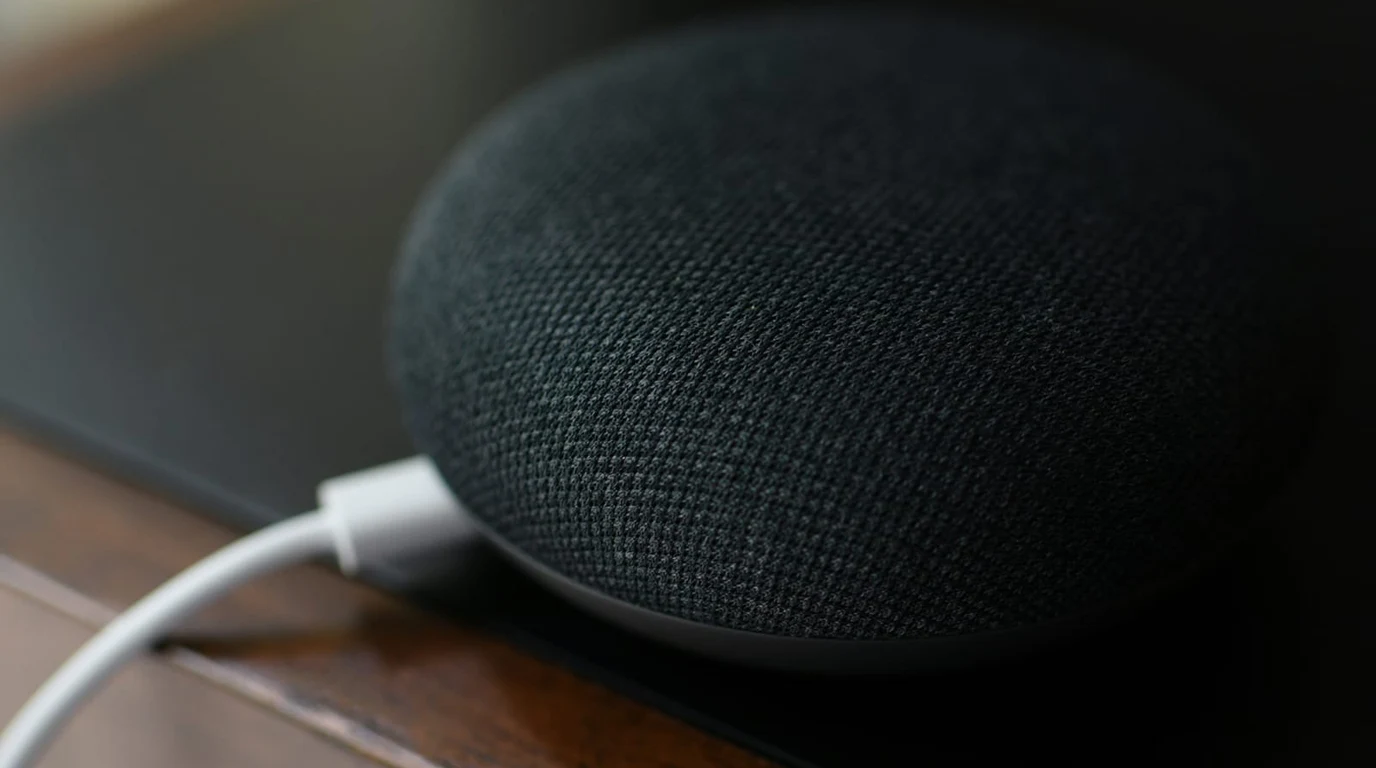
For the past decade, residential voice automation has been dominated by commercial cloud platforms: Amazon Alexa and Google Assistant. While convenient to set up using mass-market smart speakers, cloud-dependent voice assistants harbor severe structural liabilities for custom smart home owners: continuous transmission of private audio packets to corporate servers, unannounced deprecation of device integrations, mandatory subscription paywalls, and complete loss of voice automation whenever internet service drops. In response, custom integration architects and privacy-conscious smart home builders are executing massive migrations to Home Assistant Assist—a 100% local, sovereign voice pipeline. Powered by lightweight neural open-source models, local voice control operates entirely on local hardware with zero cloud telemetry or subscription surveillance fees. Here is Marcus Vance’s forensic systems architecture benchmark comparing Home Assistant Assist against Amazon Alexa across command execution latency, wake-word accuracy, multi-room context awareness, and privacy engineering.
Can Local Voice Control Truly Replace Amazon Alexa and Google Assistant?
The traditional skepticism surrounding open-source voice control centered on hardware requirements. Historically, accurate automatic speech recognition (ASR) required enterprise GPUs consuming hundreds of watts. That technological barrier collapsed over the past 24 months due to three breakthroughs: openWakeWord (lightweight neural models running on 50MB of RAM), faster-whisper (quantized OpenAI Whisper running at 4x realtime on modern x86 CPUs), and Piper (ultra-fast neural text-to-speech that synthesizes natural human voices in sub-50 milliseconds).
Voice Control Benchmark Matrix: Local Assist vs Cloud Alexa
Compare the operational performance and privacy characteristics across both paradigms:
| Architecture Dimension | Home Assistant Assist (Local) | Amazon Alexa (Cloud-Based) |
|---|---|---|
| Command Execution Latency | 350 ms to 450 ms (Local LAN) | 850 ms to 1,600 ms (Cloud Roundtrip) |
| Internet Outage Behavior | 100% Fully Functional | Completely Dead (Red ring error) |
| Audio Privacy & Telemetry | Zero Data Leaves Local Subnet | Continuous audio streaming to AWS servers |
| Custom Intent Parsing | Full Jinja2 regex & custom aliases | Restricted to Amazon Skill Store APIs |
| Satellite Hardware Options | ESP32-S3 (Atom Echo, Willow, custom mic arrays) | Proprietary Echo speaker hardware only |
| Subscription Monetization | Zero Recurring Fees (100% Free / FOSS) | Paid subscription tiers (Alexa Plus rumors) |
The 4-Stage Local Voice Pipeline Architecture
To engineer a resilient local voice network, systems integrators structure Home Assistant Assist around four discrete pipeline stages:
- Wake-Word Detection (openWakeWord): Running directly on microcontrollers (such as ESP32-S3 boards) or on the central server, openWakeWord utilizes lightweight neural networks to detect custom phrases like *”Okay Nabu”* or *”Hey Jarvis”* with high noise rejection.
- Speech-to-Text (faster-whisper): Once triggered, audio buffers stream across the local Wi-Fi or Ethernet LAN to a dedicated STT engine. Running the INT8 quantized `base.en` or `small.en` model on a low-power Intel N100 mini PC transcribes natural human speech into text in under 120 milliseconds.
- Intent Recognition (Home Assistant Conversation Engine): Home Assistant parses the transcribed text against your local entity registry. By utilizing area-aware context, stating *”turn off the lights”* while speaking to the master bedroom satellite automatically resolves to the master bedroom lighting entities without needing to specify room names.
- Text-to-Speech (Piper): If spoken feedback is requested, Piper synthesizes crisp, natural human audio responses in sub-30 milliseconds, streaming the WAV file back to the satellite speaker.
Hardware Engineering: Satellite Microphones and Beamforming
A critical acoustic challenge in residential voice automation is picking up voice commands over loud background noise (such as kitchen exhaust hoods or home theater subwoofers). Custom installations deploy ESP32-S3 Satellites with Dual-Microphone Beamforming Arrays and Acoustic Echo Cancellation (AEC) (such as the S3-Box-3 or custom On-Wall satellites).
Dual-mic arrays calculate time-difference-of-arrival (TDoA), filtering out ambient television audio and spatial reverberation while isolating the speaker’s voice vector. Connected via PoE or 5V USB-C, these unobtrusive satellites blend seamlessly into walls and ceiling bulkheads, delivering whole-home voice coverage without deploying corporate smart speakers.
The Wyoming Protocol: Decoupling Voice Pipelines
The technical glue that makes Home Assistant Assist modular and future-proof is the Wyoming Protocol. Developed by the Nabu Casa team, Wyoming is an open, asynchronous network protocol designed specifically to stream raw audio, voice activity detection events, and text transcripts between disparate hardware nodes across standard TCP sockets.
By utilizing Wyoming, system architects can physically distribute the voice pipeline across specialized hardware endpoints. A low-cost Raspberry Pi or ESP32-S3 in the living room acts purely as a microphone capture satellite; an energy-efficient Intel N100 mini PC in the basement equipment rack handles faster-whisper speech-to-text; and a GPU workstation in the office runs complex large language model (LLM) intent parsing via local Ollama or vLLM instances. This decoupled architecture ensures that upgrading your speech model never requires replacing physical in-room microphone hardware.
Audio Ducking and Multi-Room Context Awareness
A classic failure in commercial smart speakers is shouting over loud multi-room music playback. In an enterprise Home Assistant installation, the voice pipeline communicates natively with multi-room audio platforms (such as Music Assistant or Snapcast).
When the wake-word is detected in the kitchen, Home Assistant fires an instantaneous Audio Ducking Event: music volume in the kitchen instantly attenuates by 20dB, the microphone captures the voice command with pristine signal-to-noise ratio, and the audio smoothly ramps back up to normal listening levels once command execution is acknowledged. This eliminates the frustrating experience of screaming over background audio in open-concept living spaces.
Furthermore, local voice satellites can be configured with hardware mute switches that physically disconnect microphone power rails, providing verifiable physical privacy assurance that software-controlled commercial voice speakers cannot guarantee, providing total peace of mind in private executive boardrooms and home master suites.
Local voice processing requires uninterrupted local power and isolated subnets. Explore our infrastructure guide on Clean Power Conditioning: Isolated Ground vs Balanced AV.