
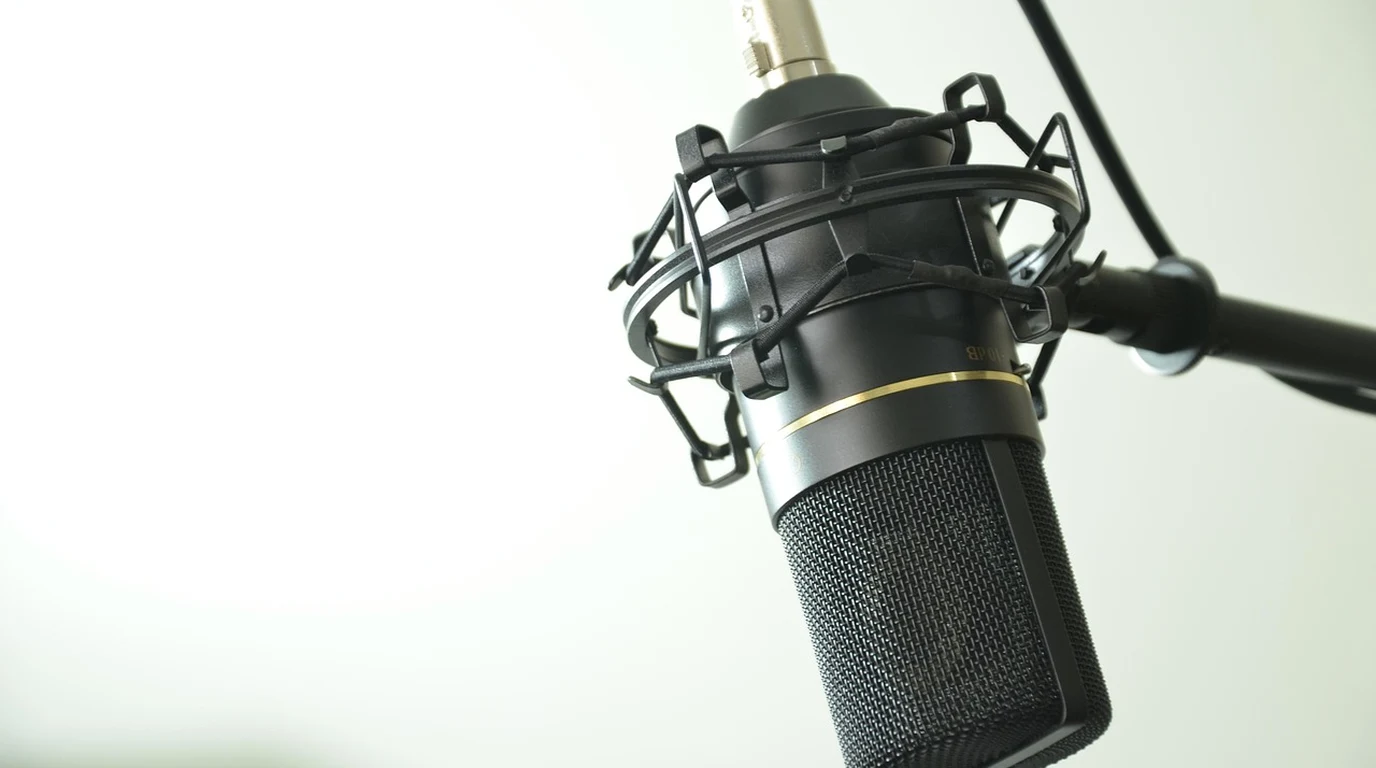
Building a zero-cloud, 100% private smart home voice control system is no longer a distant theoretical dream. With Home Assistant’s Assist pipeline, Whisper speech-to-text, and local LLMs running on home servers, you can control your entire home without a single byte of audio leaving your local network. However, the biggest hurdle to wife-and-family approval has never been server software—it is the physical microphone hardware in the room. If a voice satellite cannot hear wake words across a noisy living room or requires three seconds to respond, users immediately revert to Amazon Echo.
Direct Hardware Verdict: ReSpeaker vs. ESP32-S3-BOX-3
For a dedicated, all-in-one appliance with a responsive touchscreen, dual MEMS microphones, on-device wake-word detection (MicroWakeWord), and sub-1-second response times straight out of the box, the ESP32-S3-BOX-3 is the gold standard for Home Assistant voice satellites. For whole-room far-field acoustic pickup, superior hardware acoustic echo cancellation (AEC), and custom 3D-printed enclosure installations, pairing a Raspberry Pi Zero 2W with a Seeed ReSpeaker 2-Mic or 4-Mic HAT running Wyoming Satellite offers superior raw microphone sensitivity.
The Local Voice Pipeline: Wake Word, STT, Intent, and TTS
To evaluate voice satellite hardware, we must examine how modern local voice architectures operate. In a cloud-dependent system (like Alexa or Siri), the physical speaker continuously records rolling audio, listening for a keyword. Once triggered, the entire audio stream is compressed and beamed to hyperscale cloud servers for transcription and language processing.
In a private local architecture using Home Assistant Assist, the pipeline is modularized across four distinct stages:
- Wake Word Engine (Edge Device or Server): The satellite detects the wake word (e.g., “Hey Jarvis” or “Okay Nabu”) using on-device ML models like openWakeWord or microWakeWord.
- Speech-to-Text (Local STT): Once awakened, the satellite streams raw PCM audio over the local network via the Wyoming protocol to a server running Faster-Whisper.
- Intent Processing (Local Brain): Home Assistant’s native conversation agent or an Ollama-hosted local LLM (like Llama 3 8B or Mistral) parses the text and executes the entity command.
- Text-to-Speech (Local TTS): Piper synthesizes high-quality audio responses on the server and streams them back to the satellite’s internal speaker for playback.
| Hardware Feature | ESP32-S3-BOX-3 | Raspberry Pi Zero 2W + ReSpeaker |
|---|---|---|
| Processing Core | Espressif ESP32-S3 Dual-Core Xtensa LX7 (240MHz) | Broadcom BCM2710A1 Quad-Core ARM Cortex-A53 (1GHz) |
| Operating System / Firmware | ESPHome firmware (bare-metal, zero OS overhead) | Raspberry Pi OS Lite (Linux) + Wyoming Satellite |
| Wake-Word Processing Location | On-device via microWakeWord (zero network delay) | Local on-device openWakeWord or offloaded to server |
| Microphone Configuration | Dual Knowles MEMS digital microphones | Dual or Quad MEMS microphones with dedicated DSP codec |
| Acoustic Echo Cancellation (AEC) | Hardware AEC supported in ESP-SR algorithm library | Software AEC via PulseAudio/PipeWire or DSP HAT chip |
| Visual Display & Feedback | 2.4-inch capacitive touchscreen (visual avatar & cards) | RGB APA102 LEDs or external I2C display add-on |
| Power Consumption | Sub-1W (approx. 180mA at 5V idle) | 1.8W to 3.5W (approx. 400mA at 5V idle) |
ESP32-S3-BOX-3: The Turnkey Appliance with MicroWakeWord
The ESP32-S3-BOX-3, manufactured by Espressif and adopted as the flagship development platform by the Open Home Foundation, represents the cleanest physical implementation of private local voice. Running bare-metal ESPHome firmware, it boots in less than two seconds and consumes under 1 watt of power.
What makes the S3-BOX-3 exceptional is microWakeWord. Developed specifically for microcontrollers with vector acceleration instructions (like the ESP32-S3), microWakeWord performs continuous neural network inference on raw audio frames entirely inside the chip’s internal SRAM. The device never streams a single byte of audio over your Wi-Fi until the wake word is verified locally. Once triggered, the integrated 2.4-inch display provides instant visual confirmation with animated expressions, displaying the recognized text and current room climate stats.
Raspberry Pi Zero 2W + ReSpeaker: Far-Field Audio Superiority
While the S3-BOX-3 is a brilliant nightstand or desk companion, it can struggle in large open-concept kitchens or living rooms when music is playing or an extractor fan is whirring. This is where a Raspberry Pi Zero 2W paired with a Seeed ReSpeaker microphone array shines.
The ReSpeaker 4-Mic Array utilizes circular microphone geometry with a dedicated hardware codec chip that performs Direction of Arrival (DoA) beamforming. When someone speaks across an 8-meter living room, the DSP isolates the acoustic source while applying spatial noise suppression to background chatter. Furthermore, running full Linux on the Pi Zero 2W allows Wyoming Satellite to integrate advanced software acoustic echo cancellation (AEC). Even while the satellite’s speaker is actively playing back music or an announcement, it can cancel its own audio from the microphone feed, allowing it to hear your voice interruptions without requiring you to shout.
Acoustic Tuning and Satellite Placement for 360-Degree Voice Capture
The physical placement and acoustic environment of a local voice satellite dictate its success far more than software algorithms. Microphones are sensitive to physical boundary loading and acoustic room reflections that distort human speech patterns.
To ensure high wake-word and speech-to-text accuracy, follow these acoustic installation guidelines:
- Avoid Corner Boundary Loading: Never position a voice satellite directly into an interior corner or under low cabinets. Acoustic boundary loading amplifies low-frequency reverberations (room modes), creating muddy, boomy audio that degrades Whisper’s transcription accuracy. Satellites should be placed in open space, at least 30cm (12 inches) away from vertical wall boundaries.
- Physical Isolation from Surface Vibrations: If placing a voice satellite on a countertop, desk, or shelf near kitchen appliances or desktop speakers, use compliant silicone decoupling feet. Mechanical vibrations traveling through furniture can conduct directly into MEMS microphone diaphragms, masquerading as low-frequency rumble that triggers false wake-word activations.
- Line-of-Sight Acoustic Paths: Maintain clear line-of-sight between primary seating areas and the satellite’s microphone ports. Placing a satellite behind computer monitors, dense floral arrangements, or decorative books attenuates critical high-frequency speech consonants (such as ‘s’, ‘t’, and ‘ch’ sounds in the 2kHz to 6kHz range) that the wake-word engine relies on for linguistic classification.
Server-Side GPU Offload: Slashing Transcription Latency to Sub-200ms
Even with optimal edge microphone hardware, overall voice assistant usability depends on total turnaround latency—the time elapsed between the user finishing their sentence and the local speaker responding. While running Faster-Whisper on a multi-core host CPU (such as an Intel i5 or AMD Ryzen 7) can transcribe audio in 600ms to 900ms, offloading speech-to-text inference to a dedicated GPU transforms the responsiveness of the entire system.
By passing an entry-level discrete GPU (such as an NVIDIA RTX 3050, Tesla T4, or even an inexpensive GTX 1650) to the Wyoming-Whisper container via Docker or Proxmox PCIe passthrough, inference latency drops to sub-150ms using the ‘medium-int8’ or ‘distil-whisper’ models. Combined with Piper TTS generating voice audio in under 80ms, total glass-to-glass turnaround drops to under 400 milliseconds. This near-instantaneous response speed completely bridges the performance gap with commercial cloud ecosystems, delivering an ultra-responsive, privacy-respecting voice experience for the entire household.
Deployment Playbook: Room-by-Room Strategy
Estate Voice Satellite Layout Guide
- Bedrooms & Home Offices: Place ESP32-S3-BOX-3 units on desks and nightstands. The compact footprint, physical mute switch, capacitive touch screen for quick light toggles, and sub-1W power draw make it ideal for close-proximity interaction.
- Kitchens & Open Living Areas: Install ceiling-mounted or discreet shelf-mounted Raspberry Pi Zero 2W units equipped with Seeed ReSpeaker 4-Mic arrays. The beamforming array and advanced echo cancellation ensure reliable wake-word capture over cooking noise, television audio, and family chatter.
- Server Sizing Rule: Ensure your local Home Assistant host (Proxmox NUC or server) has at least 4 CPU threads or a small discrete GPU dedicated to Faster-Whisper and Piper. Offloading speech-to-text to a GPU reduces transcription time from 800ms down to 120ms, delivering instant, conversational response speeds.
For integrating localized audio alerts with camera detection events, see Unifi Protect vs Frigate: Coral TPU NVR Detection.
Explore our latest comprehensive breakdown on Home Assistant Voice Satellites: Micro Wake Word Tuning.
Explore our latest comprehensive breakdown on Subwoofer Calibration: MiniDSP 2×4 HD Multi-Sub Tuning.
Explore our latest comprehensive breakdown on Lutron HomeWorks QSX vs RadioRA 3: Luxury System Topology.
Explore our latest comprehensive breakdown on PoE Security Camera Wiring: Cat6 vs Cat6A Shielded Drops.
Explore our latest comprehensive breakdown on Frigate NVR AI Acceleration: Coral M.2 vs Hailo-8 TOPS.