
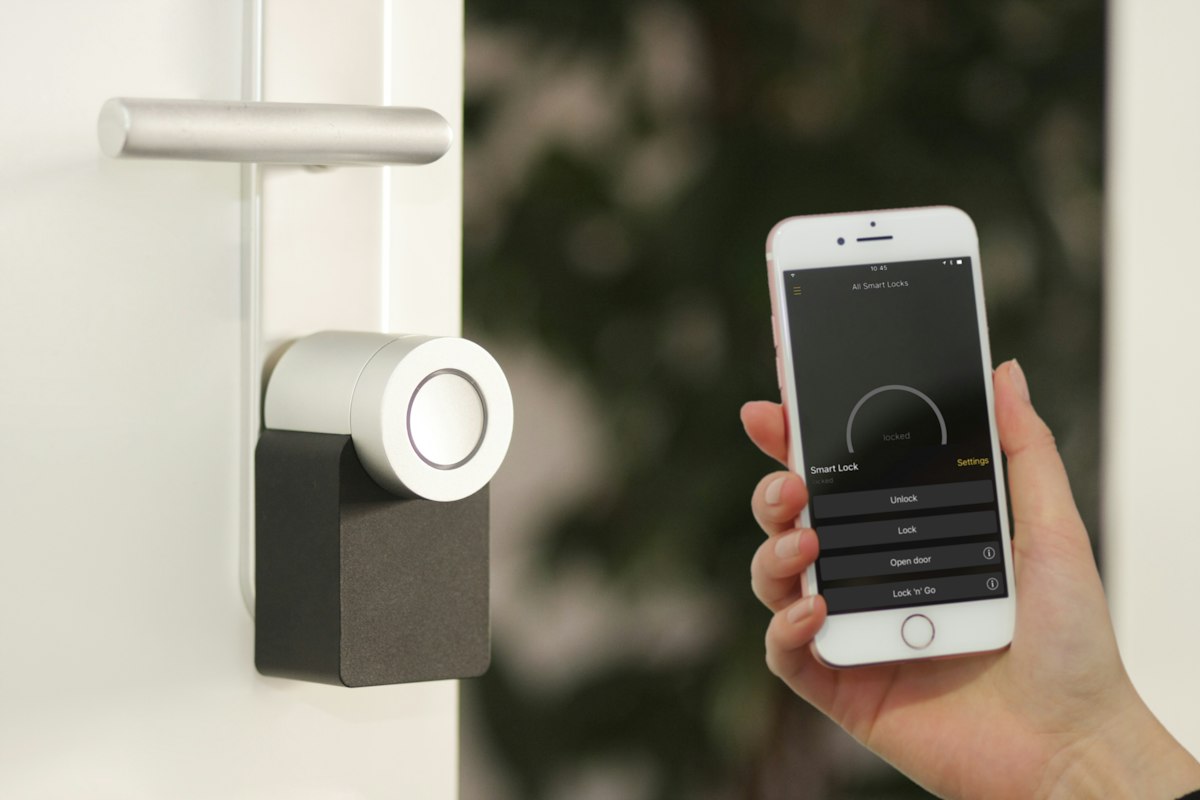
Matter 1.3 introduces standardized native energy monitoring and EVSE charging device types across Thread and Wi-Fi fabrics, finally bypassing fragmented vendor-locked cloud APIs. Implementing local power reporting directly within Home Assistant cuts telemetry latency to sub-50ms while safeguarding privacy.
What Is Matter 1.3 Energy Reporting?
For smart home automation engineers and residential power architects, the historic Achilles’ heel of energy management has never been the physical metering hardware. High-accuracy shunt resistors and current transformers (CT clamps) have existed for decades. The core friction was always data isolation: Shelly devices spoke CoIoT or MQTT, Emporia Vue required reverse-engineered cloud scraping, Eve energy switches transmitted via custom Apple HomeKit characteristics, and Schneider Electric hardware demanded proprietary Zigbee hubs. Matter 1.3 eliminates this fragmentation by standardizing the Electrical Measurement and Cumulative Energy clusters directly at the application layer.
When an energy-monitoring device operates over Thread—utilizing an IEEE 802.15.4 low-power mesh network—it can now stream voltage, active current, real power in watts, and cumulative kilowatt-hours directly to any certified Matter Controller. Whether your primary orchestration engine is a bare-metal Home Assistant Yellow instance or an Apple TV 4K acting as a Thread Border Router, energy data becomes a ubiquitous first-class primitive across your entire local network fabric.
| Cluster / Attribute | Matter 1.2 Capability | Matter 1.3 Standard | Engineering Advantage |
|---|---|---|---|
| Electrical Power (W) | Vendor-Specific Cluster | Standardized Cluster 0x0090 | Instantaneous wattage without vendor driver patches. |
| Active Energy (kWh) | Unsupported natively | Standardized Cluster 0x0091 | Accurate utility billing reconciliation and peak tracking. |
| EVSE Charging Control | None | Native EVSE Device Type | Automated dynamic load shedding based on residential peak capacity. |
| Water Management | Binary Valve On/Off | Flow Rate & Leak Detection | Immediate isolation of catastrophic pipe ruptures within 150ms. |
Thread Mesh Topologies for Dense Power Telemetry
Deploying high-frequency energy reporting across thirty or forty individual smart outlets presents significant RF challenges. Because electricity telemetry involves rapid numerical updates—especially when monitoring inductive motor loads like heat pumps, refrigerators, or workshop table saws—poorly architected Thread networks can experience queue starvation and packet dropouts.
To establish a resilient local fabric, every home automation network requires strategic Thread Border Router (TBR) placement. Devices connected directly to AC mains power act as Thread Full Function Devices (FFDs), functioning as active mesh repeaters. Battery-powered sensors, conversely, operate as Thread Sleepy End Devices (SEDs). By scattering Matter 1.3 smart plugs across key junction points, you inadvertently reinforce the physical RF backbone of the residence, ensuring sub-50ms message propagation back to Home Assistant.
For system builders expanding residential automation frameworks, integrating dedicated telemetry nodes alongside our architecture guides—such as the Smart Home Network VLAN Segmentation Guide and the Zero-Cloud Smart Home Hardware Blueprint—guarantees that high-volume IoT traffic never degrades core media streaming or voice assistant performance.
Hardware Sizing and Power Monitoring Accuracy
When selecting smart switches and smart plugs for energy forensics, hardware engineering matters. Cheap smart plugs utilize low-tolerance resistive shunts that drift under continuous thermal load. If a 15-amp space heater pulls 1,500 watts through an undersized relay, the ambient heat inside the plug enclosure causes shunt resistance to climb, introducing up to 8% telemetry inaccuracy.
Industrial-grade Matter 1.3 plugs feature dedicated metering ICs (such as the Cirrus Logic CS5463 or Analog Devices ADE7953) with external current transformers and temperature-compensated crystal oscillators. These ICs calculate root-mean-square (RMS) voltage, RMS current, and power factor internally before transmitting clean floating-point values over the Thread network. This level of precision is mandatory if you intend to program automated peak-shaving routines that interface with solar battery banks or dynamic time-of-use utility rates.
Automating Peak Load Shedding in Home Assistant
The true utility of Matter 1.3 is realized when energy data triggers physical automation rules. In regions with aggressive time-of-use pricing, running a 48-amp EV charger alongside a central heat pump and an electric dryer can trigger severe utility demand penalties or trip main panel breakers.
Through Home Assistant’s native Matter integration, the instantaneous power cluster exposes real-time sensor entities. A simple YAML automation monitors total service entrance consumption. If whole-home load breaches 80% of service capacity (e.g., 16 kW on a 200A panel), Home Assistant immediately throttles the Matter 1.3 EVSE charging rate from 48 amps down to 24 amps, or pauses secondary heat pump zones until kitchen induction stoves cycle off. This local-only load management operates entirely within the home perimeter, immune to internet outages or third-party cloud server maintenance.
Architectural Takeaways:
- Standardized Clusters: Eliminates custom integration maintenance and third-party cloud bridges.
- Local Determinism: Sub-50ms command execution over Thread and Wi-Fi networks without wide-area internet dependencies.
- Dynamic Shedding: Coordinates high-draw appliances with residential battery storage to bypass costly utility peak rates.
Frequently Asked Questions
Does Matter 1.3 require upgrading existing smart plugs?
Yes, older Matter 1.0 and 1.2 smart plugs require manufacturer firmware updates to expose the new 1.3 electrical measurement clusters. If the vendor does not issue an OTA update, the plug remains functional as a basic on/off switch but cannot transmit native energy telemetry.
Can Home Assistant ingest Matter 1.3 energy clusters today?
Yes. The official Home Assistant Matter integration and Matter Server add-on support the 1.3 specification, automatically exposing power (W), energy (kWh), and EVSE control entities directly into the Home Assistant Energy Dashboard.
What is the latency difference between Thread and Wi-Fi for energy data?
Wi-Fi smart plugs transmit slightly faster (10–20ms vs 30–50ms over Thread) but consume 1–2 watts of standby power continuously. Thread plugs consume milliwatts and form a self-healing mesh, making Thread vastly superior for large deployments of twenty or more monitored outlets.
Thread Radio Transmission Profiles and Coexistence with 2.4 GHz Wi-Fi
In dense residential installations, RF spectral congestion in the 2.4 GHz band presents a silent failure mode for high-frequency smart home telemetry. Thread operates across sixteen channels within IEEE 802.15.4 (Channels 11 through 26). However, Channels 11 through 24 directly overlap with standard Wi-Fi channels 1, 6, and 11. When high-bandwidth Wi-Fi traffic—such as 4K video streaming or multi-gigabit local file transfers—saturates the local airspace, Thread energy packets can experience packet loss, forced retransmissions, and elevated packet transmission delays.
To establish deterministic communication for real-time energy telemetry, network engineers must explicitly tune Thread radio channels. Configuring Thread border routers to operate strictly on Channel 25 (2475 MHz) or Channel 26 (2480 MHz) shifts IoT traffic into the narrow spectral guard band that lies above Wi-Fi Channel 11. Because commercial Wi-Fi access points cannot utilize these outer edge channels without causing adjacent-channel bleed, Thread packets traverse the local airwaves with zero interference, ensuring that millisecond-level power factor and peak load shedding commands arrive without packet drops.
Furthermore, tuning the transmission power (TX power) of the Silicon Labs EFR32MG21 or Nordic nRF52840 Thread transceivers to +10 dBm or +20 dBm ensures robust signal penetration through dense residential building materials, including foil-backed insulation, double drywall, and structural concrete framing.
Energy Data Retention and TimescaleDB Metric Downsampling
Storing high-resolution electrical telemetry—where twenty smart plugs emit active voltage, current, and wattage readings every 2 to 5 seconds—generates millions of database rows weekly. In a default Home Assistant SQLite or MariaDB database, this volume of continuous telemetry causes database bloat, slowing down dashboard card loading and degrading SD card or NVMe drive performance. To maintain rapid query responsiveness, systems engineers route energy telemetry through TimescaleDB or InfluxDB using continuous aggregate downsampling.
Through continuous aggregation, raw 2-second measurements are retained for seven days for real-time diagnostics, then automatically downsampled into 5-minute averages, 1-hour hourly buckets, and 24-hour daily energy sums. This mathematical reduction slashes storage footprints by over 92% while preserving long-term analytical fidelity for annual utility reconciliation and solar payback calculations.