
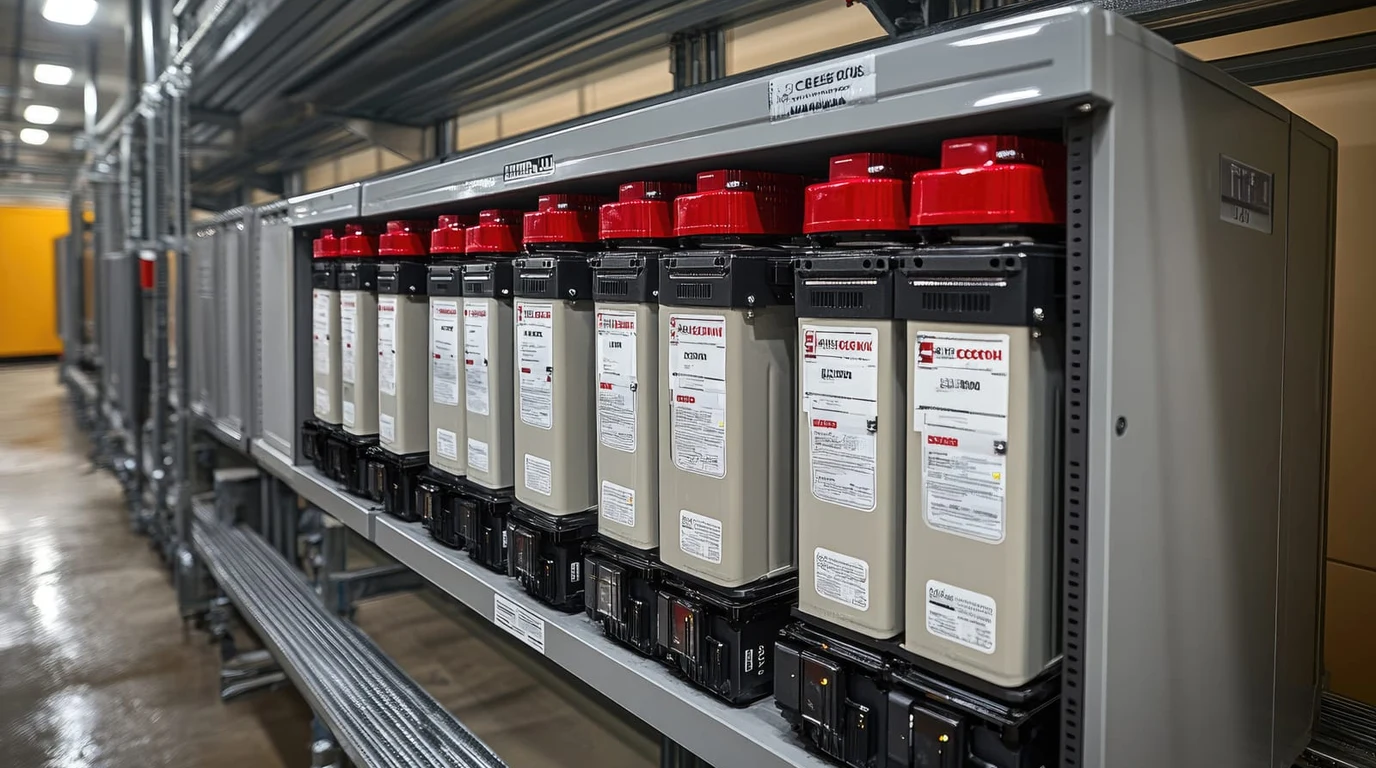
Line-Interactive UPS units introduce an electromechanical transfer relay delay between 4 and 12 milliseconds during utility power sags, which can trip sensitive network switches, cause HDMI handshakes to crash, and induce audible hum via stepped sine wave approximation. For reference AV equipment racks and enterprise servers, an Online Double-Conversion UPS is mandatory: it continuously rectifies incoming AC utility power into DC before generating a pure, galvanic-isolated sine wave with true zero-millisecond (0ms) transfer time and total harmonic distortion (THD) under 2%.
The Power Grid Reality: Sags, Surges & Micro-Outages in Sensitive Racks
Modern residential AV equipment racks and enterprise homelab servers contain tens of thousands of dollars in sensitive digital silicon: laser projectors, multichannel DSP processors, multi-gigabit PoE switches, NAS storage pools, and power amplifiers. Yet, many systems integrators protect this high-end hardware with basic desktop line-interactive battery backup units purchased from big-box retailers.
Municipal electrical grids do not supply pure electrical energy. Utility AC power is constantly contaminated by voltage sags, switching transients, harmonic distortion from variable-frequency heat pump motors, and sudden micro-outages lasting a few electrical cycles. When utility power fluctuates, the internal switching mechanics of your Uninterruptible Power Supply (UPS) dictate whether your hardware stays alive or suffers hardware resets, corrupt file systems, and HDMI handshake drops.
Topology Comparison: How Line-Interactive vs Double-Conversion Operates
The operational difference between these two UPS topologies lies in how incoming utility voltage is routed to your equipment under normal operating conditions.
Line-Interactive UPS Architecture: Under normal utility grid conditions, a Line-Interactive UPS passes raw utility power directly to your connected equipment through an internal autotransformer equipped with Automatic Voltage Regulation (AVR) taps. If incoming grid voltage drops slightly (a brownout) or surges, the AVR autotransformer mechanically switches transformer windings to boost or buck the voltage back into a nominal range (typically +/- 10% to 12%). The internal battery and inverter remain dormant on standby.
The critical vulnerability occurs when incoming utility power fails completely or drops below the AVR threshold. When this occurs, an electromechanical relay must physically open to disconnect the utility grid and engage the internal DC-to-AC battery inverter. This mechanical relay transfer takes between 4 to 12 milliseconds. While desktop PC power supplies can sometimes bridge a 10ms gap via internal hold-up capacitors, high-density 10GbE network switches, Crestron processors, and high-end DACs frequently drop synchronization during the relay transfer.
Online Double-Conversion (True Online) Architecture: An Online Double-Conversion UPS operates on a completely different electrical principle. Incoming AC utility power never touches your sensitive equipment directly. Instead, 100% of incoming AC power is immediately routed through an internal high-voltage rectifier that converts AC power into direct current (DC). This clean DC bus continuously charges the internal battery array while simultaneously feeding an internal pulse-width modulated (PWM) inverter. The inverter reconstructs a pristine, brand-new AC pure sine wave that powers your equipment 100% of the time.
Because the inverter is running continuously, there is absolute zero transfer time (0.00 milliseconds) when utility power fails. The DC bus merely draws energy seamlessly from the battery string rather than the rectifier. Your connected AV equipment and servers experience zero voltage dip, zero phase disruption, and zero electrical interruption.
| Power Engineering Metric | Line-Interactive UPS | Online Double-Conversion UPS |
|---|---|---|
| Grid-to-Battery Transfer Time | 4 – 12 milliseconds (Relay switch) | 0.00 milliseconds (True Zero Break) |
| Normal AC Power Path | Direct utility pass-through via AVR | Continuous AC -> DC -> AC Regeneration |
| Output Waveform Quality | Simulated / Stepped or Pure Sine | Pristine Pure Sine Wave (THD < 2%) |
| Voltage Regulation Precision | Loose: +/- 8% to 12% via AVR taps | Tight: +/- 1% to 2% Continuous |
| Frequency Stabilization | Passes grid frequency directly (50/60Hz) | Locks exact frequency (Converter mode) |
| Electrical Noise & Isolation | Basic MOV surge suppression | Galvanic barrier; isolates common-mode noise |
| Acoustic Fan Noise | Silent during normal operation | Continuous internal cooling fan running |
| Energy Efficiency | 95% – 98% (Low heat output) | 88% – 94% (Higher thermal load / ECO mode) |
Waveform Distortion & Total Harmonic Distortion (THD) in Audio Gear
Budget line-interactive battery backup units utilize modified square waves (also marketed as simulated or stepped sine waves) to reduce manufacturing costs. A stepped sine wave replaces a smooth 60Hz mathematical wave with blocky square steps containing severe high-frequency odd harmonics.
When feeding modern electronics equipped with Active Power Factor Correction (Active PFC) power supplies, stepped sine waves cause extreme electrical stress. The power supply’s PFC circuitry views the sharp square edges as instantaneous voltage transients, drawing massive current spikes that overheat inductors and trigger premature power supply shutdown. In sensitive analog audio components—such as preamplifiers, moving-coil phono stages, and studio monitor DACs—stepped waves induce severe 60Hz ground buzz and high-frequency hash that bleeds straight into the audio output.
An Online Double-Conversion UPS regenerates a pure mathematical sine wave with Total Harmonic Distortion (THD) strictly controlled below 2% to 3%. This pristine waveform lowers the noise floor of connected audio components and completely protects Active PFC power supplies from thermal cycling.
Standby Generators & Frequency Drift Stabilization
In high-end luxury residences equipped with whole-home standby backup generators (e.g., Generac, Kohler, Cummins), Line-Interactive UPS systems frequently fail to function when the generator kicks on. Standby generators powered by natural gas or diesel engines suffer from mechanical governor hunt. As heavy household loads cycle on and off (such as central air conditioning compressors or heat pumps), the generator’s rotational speed fluctuates, causing the electrical AC frequency to drift between 57Hz and 63Hz.
Line-Interactive UPS units monitor input frequency tightly. When the UPS detects incoming frequency drifting beyond its narrow 59Hz–61Hz window, its microcontroller assumes the power is corrupt and refuses to accept generator input. The UPS stays on battery power, completely draining its internal batteries even while the backup generator is roaring outside!
An Online Double-Conversion UPS thrives in generator environments. Because the internal rectifier converts incoming AC to DC regardless of frequency drift (typically accepting wide input windows from 40Hz to 70Hz), the UPS filters out all generator mechanical instability and outputs an unshakeable, frequency-locked 60.00Hz sine wave to the equipment rack.
Thermal & Acoustic Management: Equipment Closet Deployment
While Online Double-Conversion UPS systems deliver unmatched electrical protection, systems architects must account for their physical characteristics during installation:
- Acoustic Fan Noise: Because the rectifier and inverter circuits operate continuously, cooling fans run constantly. High-capacity 2kVA to 3kVA rackmount online units produce between 45dB and 55dB of acoustic fan noise. They belong in dedicated basement equipment rooms or ventilated low-voltage closets, never directly inside a living room or quiet media lounge.
- Thermal BTU Load: Due to continuous double-conversion losses (typically 88% to 92% efficiency), a 2000W online UPS generates approximately 600 to 800 BTU/hr of thermal heat under heavy load. Enclosed AV rack closets must incorporate active exhaust ventilation (such as AC Infinity Cloudplate rack fans) to prevent thermal buildup.
- High-Efficiency ECO Mode: Modern online units feature an intelligent ECO mode that operates in line-interactive pass-through mode during stable utility grid conditions, achieving 98% efficiency, and switches to double-conversion in under 2 milliseconds upon detecting utility instability.
For standalone consumer televisions, desktop workstations, or secondary network drops, a quality pure sine wave Line-Interactive UPS (such as the CyberPower PFC Sinewave series) provides sufficient protection at low cost and zero operational fan noise. However, for primary reference AV equipment racks, high-end home theaters, multi-drive NAS arrays, PoE camera recorders, and facilities paired with standby generators, an Online Double-Conversion UPS (such as the Eaton 9PX, APC Smart-UPS Online, or Vertiv Liebert GXT5) is non-negotiable. Its true zero-millisecond transfer time, galvanic isolation, generator frequency smoothing, and pure sub-2% THD sine wave guarantee that your critical AV and server hardware will never crash during utility instability.
To complement clean rack power with whole-home electrical infrastructure, study our teardown on Smart Electrical Panels: SPAN vs Leviton for automated circuit shedding, and read our in-depth comparison on Thread Border Routers: Apple TV 4K vs Home Assistant.