
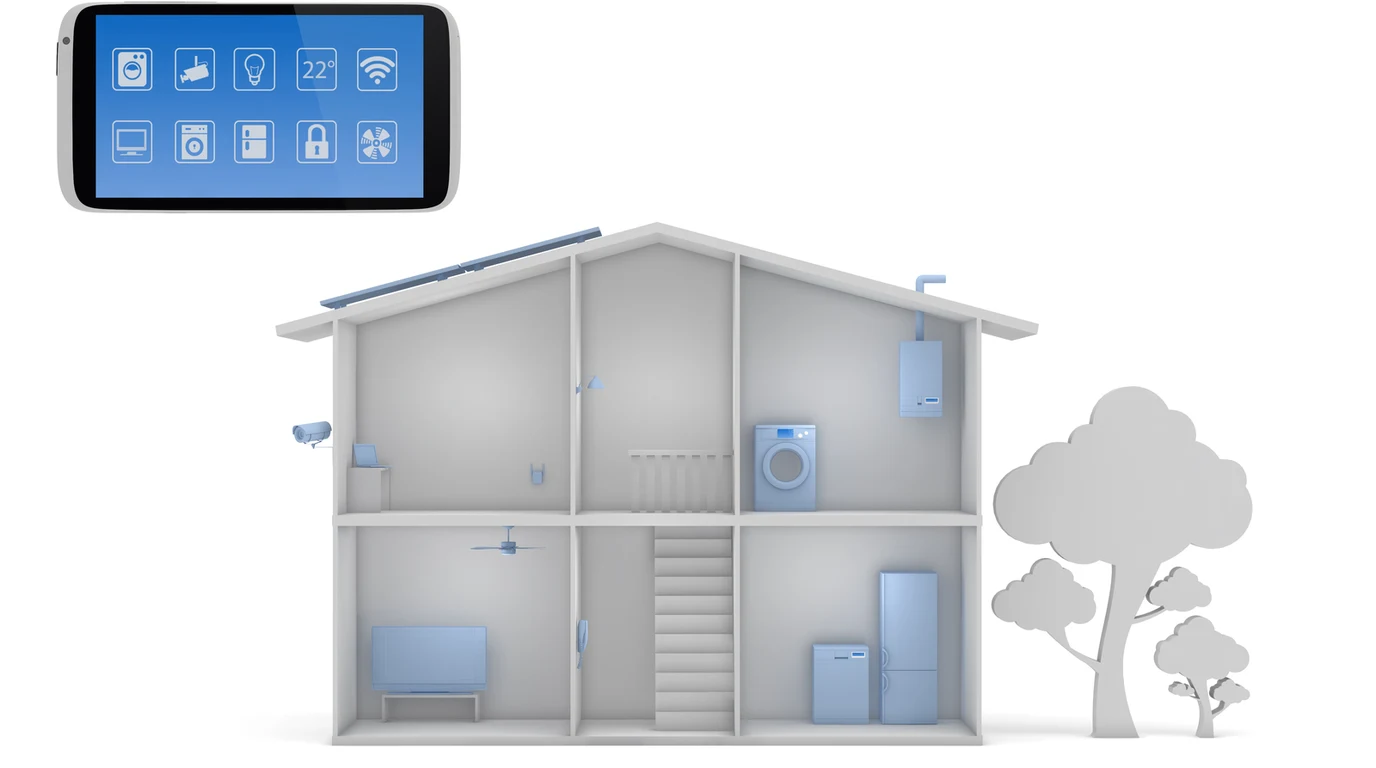
KNX provides a completely decentralized, open-standard ISO/IEC 14543-3 bus architecture running on a dedicated 9600-baud twisted-pair (TP-1) cable where every sensor, relay, and keypad contains its own microprocessor, eliminating any single point of processor failure. Lutron HomeWorks QSX relies on a centralized, proprietary high-speed processor topology with peerless LED dimming curves, ultra-low RF latency (Clear Connect Type A & X), and seamless North American dealer ecosystem support.
The Luxury Automation Dilemma: Open Distributed Bus vs Proprietary Centralized Control
When engineering high-reliability luxury smart homes and commercial enterprise facilities, the lighting and shading automation infrastructure forms the operational backbone of the physical building. Unlike consumer IoT gadgets that operate over unreliable 2.4GHz Wi-Fi networks and depend on ephemeral cloud subscriptions, enterprise-grade lighting automation systems must maintain continuous 100% uptime for decades.
Integrators designing ultra-prime properties face a defining infrastructural choice between two dominant platforms: KNX (the dominant open worldwide building automation standard) and Lutron HomeWorks QSX (the gold standard of luxury North American architectural lighting). Understanding their architectural divergence is critical for systems architects, electrical engineers, and high-end technology integrators.
Architectural Comparison: Decentralized Intelligence vs Centralized Processors
The fundamental philosophical divide between KNX and Lutron lies in system topography and failure domains.
KNX Decentralized Bus: In a KNX installation, there is no central master computer or proprietary hub controlling basic operations. The entire network runs on a standardized 29V DC shielded twisted-pair bus cable (KNX TP-1). Every single device on the bus—whether it is a Basalte tactile keypad, an ABB 24-channel relay module, an MDT heating actuator, or a Steinel presence detector—incorporates its own internal flash microcontroller and transceiver chip. When a user taps a wall switch, the switch broadcasts a standard telegram containing a Group Address directly onto the bus. The listening relay actuator decodes the telegram and energizes its internal contactor in under 20 milliseconds. If any device on the network fails or is completely removed, every other device continues functioning without interruption. There is zero single point of failure.
Lutron HomeWorks QSX Centralized Topology: Lutron HomeWorks QSX relies on powerful, centralized hardware processors installed inside low-voltage equipment panels. Keypads, shade drives, and power modules connect back to the QSX processor via dedicated RS-485 wired links (such as the QS link) or proprietary Clear Connect RF wireless links. When a homeowner presses a SeeTouch, Palladiom, or Alisse keypad, the button press event is transmitted back to the central QSX processor. The processor evaluates its programmed database logic, calculates scene cross-fade curves, and sends output firing commands down to panel-mounted dimming modules. While this centralized architecture enables immensely complex logic programming and synchronized multi-zone fade dynamics, a failure of the central processor can disable automated keypads across that processor’s entire subsystem.
| Architectural Metric | KNX (ISO/IEC 14543-3) | Lutron HomeWorks QSX |
|---|---|---|
| System Topology | Decentralized peer-to-peer bus | Centralized processor-based hierarchy |
| Single Point of Failure | None (Independent microcontrollers) | Yes (Central QSX processor) |
| Hardware Interoperability | 500+ Certified Independent Vendors | 100% Proprietary (Lutron ecosystem only) |
| Programming Software | ETS (Engineering Tool Software – Vendor Neutral) | Lutron Designer (Authorized Dealers Only) |
| Low-End Dimming Precision | Dependent on DALI-2 gateway / actuator | Industry Leading (Continuous 0.1% Dimming) |
| Wireless Protocol | KNX RF (868 MHz) / Matter IP bridges | Clear Connect Type A (434MHz) & Type X (2.4GHz Mesh) |
| Geographic Dominance | Europe, Middle East, Asia, Global Commercial | North America Luxury Residential |
Bus Latency & Telegram Transmission Physics: CSMA/CA vs Clear Connect
In large automation deployments containing hundreds of lighting circuits, keypad button response latency must feel instantaneous. If a homeowner taps an entrance button and experiences even a 250-millisecond delay before hallway chandeliers illuminate, the system is perceived as broken.
KNX TP-1 transmits asynchronous data at a fixed baud rate of 9,600 bits per second using differential Manchester encoding over a single twisted pair. A standard KNX control telegram consists of 8 to 23 bytes (approximately 80 to 230 bits). At 9600 baud, transmitting a complete telegram across the physical copper bus takes approximately 20 to 40 milliseconds.
To prevent data collisions when multiple sensors or keypads trigger simultaneously, KNX utilizes Carrier Sense Multiple Access with Collision Avoidance (CSMA/CA). Devices monitor the electrical voltage state of the bus line before transmitting. If two devices attempt to transmit at the exact same instant, the telegram with the lower numerical priority level (such as an emergency fire alarm trigger) automatically asserts dominance on the bus without losing a single bit, while the lower-priority device backs off and retransmits immediately afterward.
Lutron HomeWorks QSX utilizes a split communications architecture:
- Wired QS Link: Operates at 115,200 baud over a four-conductor low-voltage cable (two 18 AWG conductors for 24V DC power and two 22 AWG twisted-pair conductors for differential RS-485 data). Telegram transmission times across the wired QS link take less than 2 to 5 milliseconds.
- Clear Connect Type A RF (434 MHz): Lutron’s legendary ultra-quiet sub-gigahertz wireless band. Because 434 MHz sits far below crowded 2.4GHz Wi-Fi and Bluetooth bands, it penetrates drywall, brick, and furniture with zero packet congestion and virtually zero latency.
- Clear Connect Type X RF (2.4 GHz): Utilized specifically for Lutron Ketra intelligent dynamic spectrum luminaires and lamp fixtures. Operates as an ultra-fast local mesh with specialized timing to synchronize millisecond Kelvin temperature color transitions and dimming levels across dozens of ceiling fixtures simultaneously.
DALI-2 Integration & Architectural LED Dimming Physics
Modern architectural lighting relies extensively on architectural downlights, linear LED tape, and tunable white fixtures powered by DALI-2 (Digital Addressable Lighting Interface) drivers. In high-end design, the quality of low-end dimming separates luxury systems from budget hardware.
KNX interfaces seamlessly with DALI-2 through certified DIN-rail KNX-to-DALI gateways from manufacturers like Gira, Theben, and Siemens. A single gateway routes commands to up to 64 or 128 individually addressed DALI-2 LED drivers, providing individual fixture health monitoring, emergency lamp testing, and logarithmic dimming down to 0.1% with DT8 tunable white control.
Lutron counters with proprietary power modules and its flagship Ketra architectural lighting platform. While Lutron HomeWorks QSX supports DALI drivers via specialized control modules, Lutron’s proprietary HomeWorks 0.1% phase-adaptive dimmers and Ketra fixtures offer the most sophisticated dimming curves in the lighting industry. Ketra fixtures incorporate integrated thermal and optical closed-loop sensors that measure LED output and phosphor drift every millisecond, automatically recalibrating diode color coordinates throughout the fixture’s 50,000-hour lifespan to prevent color mismatch across multi-light ceilings.
Third-Party Integration: Home Assistant, Crestron & Control4
Neither KNX nor Lutron operates in a vacuum; both must interface with central control platforms like Home Assistant, Crestron Home, Savant, or Control4.
KNX offers unmatched sovereign local control. By installing a standardized KNX/IP Secure router (such as a Weinzierl 777), the entire KNX bus is bridged to local Ethernet over encrypted UDP multicast. The open-source Home Assistant KNX integration connects natively to the IP router, providing instant sub-second bidirectional state synchronization, full telemetry monitoring, and zero cloud dependency.
Lutron HomeWorks QSX interfaces with third-party systems via Lutron’s LEAP (Lutron Extensible Application Protocol) over TLS-encrypted local IP sockets. While LEAP delivers fast, reliable integration with Home Assistant and commercial control systems, it requires generating authorized cryptographic certificates within the proprietary Lutron Designer software, tying long-term maintenance to certified Lutron dealers.
For North American luxury residential estates where architectural aesthetics, dealer serviceability, motorized shading integration (Sivoia QS / Palladiom), and flawless 0.1% low-end LED dimming with Ketra are paramount, Lutron HomeWorks QSX remains the premier turnkey choice. However, for commercial facilities, international luxury residences, large multi-building campuses, or sovereign systems integrators who refuse proprietary single-vendor lock-in, KNX is the ultimate open standard. KNX’s decentralized bus architecture guarantees that no single processor failure can ever leave a building in the dark, offering complete freedom to combine tactile luxury keypads, DALI-2 lighting gateways, and HVAC climate controls from over 500 certified global manufacturers.
To explore local automation integration with Thread and Matter protocols, read our detailed technical analysis on Thread Border Routers: Apple TV 4K vs Home Assistant, and review our companion guide on building the zero-cloud smart home with local voice control.