
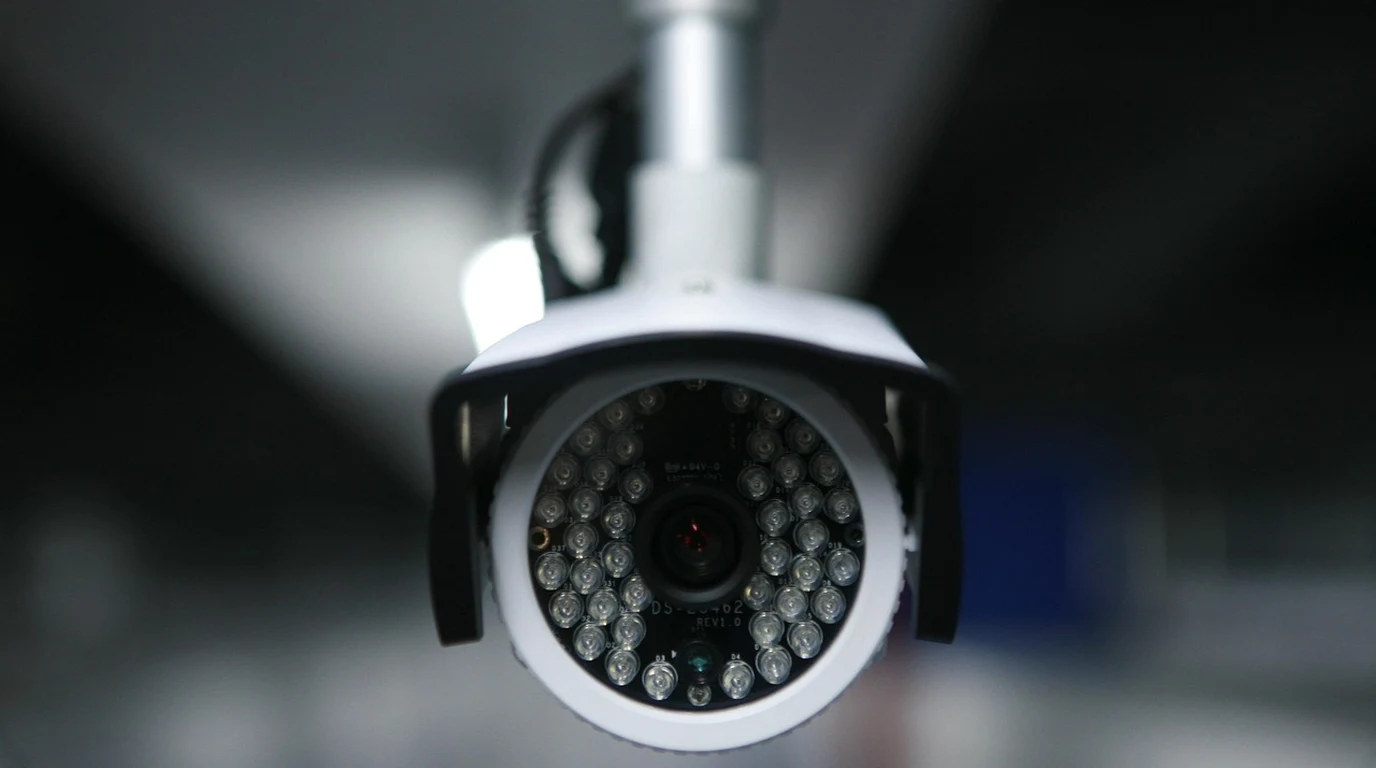
Surveillance & Optical Vision Takeaways
- Motion Blur vs Shutter Speed: A standard 4K security camera set to default auto-exposure (1/30s) produces completely unreadable, smeared license plates when vehicles travel faster than 15 mph at night.
- The Shutter Speed Mandate: True License Plate Recognition (LPR) requires manual shutter speeds locked between 1/1,000s and 1/2,000s, coupled with high-power infrared illumination, to overcome headlight glare and freeze moving alphanumeric characters.
- Sensor Sizing & Pixel Density: Cramming 8 megapixels onto a miniature 1/2.8″ image sensor degrades low-light dynamic range; high-performance LPR demands a minimum 1/1.8″ optical format with motorized varifocal telephoto lenses.
In residential perimeter defense and commercial physical security engineering, property owners frequently invest thousands of dollars into 4K ultra-high-definition surveillance systems under the assumption that higher resolution automatically captures clear vehicle license plates. However, when an incident occurs—such as a trespassing incident, hit-and-run, or nighttime perimeter breach—security reviews inevitably reveal a frustrating reality: while ambient driveway pavement is rendered in crisp 4K detail, vehicle license plates appear as solid white glowing rectangles or blurry, indecipherable grey streaks.
Capturing high-velocity vehicle tags is not a pixel-count challenge; it is a fundamental problem of optical physics, shutter exposure velocity, and photon management. Engineering a dedicated License Plate Recognition (LPR) / Automated Number Plate Recognition (ANPR) camera system requires understanding exposure mechanics, optical zoom focal lengths, and infrared beam shaping.
Why Do Standard 4K Security Cameras Fail at Capturing License Plates?
Direct Answer: Standard security cameras fail to capture license plates because auto-exposure drops the electronic shutter to 1/30s or 1/60s at night to gather light, causing severe vehicle motion blur. Furthermore, highly reflective retroreflective license plates bounce headlights and IR illumination directly back into the sensor, blowing out characters into a white bloom.
License plates are manufactured with retroreflective sheeting embedded with micro-glass beads designed to reflect vehicle headlights back toward driver eye level. When an ordinary security camera with integrated infrared LEDs illuminates a moving vehicle, two optical disasters occur simultaneously:
First, the vehicle is traveling at 25 to 45 feet per second. At a typical nocturnal shutter exposure of 1/30th of a second, the plate moves between 10 and 18 inches across the optical sensor plane while the electronic shutter is open. This physical displacement completely smears the stamped letters and numbers across hundreds of pixels, rendering character edges unrecognizable.
Second, vehicle headlights and incandescent tail-lamps create extreme dynamic range contrast. An automated exposure algorithm measuring the dark surrounding street will boost camera digital gain (ISO), causing the intensely bright retroreflective plate to overexpose into pure digital clipping (RGB values of 255, 255, 255). To capture alphanumeric data, an LPR camera must be configured with a completely separate exposure envelope that renders the entire vehicle body pitch black, capturing exclusively the illuminated reflective plate.
Dedicated LPR vs. Standard 4K Overview Camera Matrix
The following engineering matrix outlines the technical specifications separating standard overview security cameras from dedicated LPR capture nodes:
| Optical Parameter | Standard 4K Security Camera | Dedicated Optical LPR Camera | Surveillance Impact |
|---|---|---|---|
| Electronic Shutter Speed | 1/30s to 1/60s Auto Exposure | 1/1,000s to 1/2,000s Manual Fixed | High shutter speed completely freezes 50 mph motion. |
| Optical Focal Length (Lens) | 2.8mm Wide Angle (105° Horizontal FOV) | 8mm – 32mm Motorized Varifocal Telephoto | Packs 60+ pixels per foot across the vehicle plate. |
| Image Sensor Size | 1/2.8″ CMOS (Small photosite area) | 1/1.8″ Sony STARVIS 2 CMOS | Large sensor captures photon density at fast exposures. |
| Exposure Priority Metric | Balanced scene illumination (Face/Car) | Highlight Suppression & Retroreflection | Background is dark; plate characters are razor sharp. |
| Illumination Wavelength | 850nm Diffused IR or Visible White Light | High-Intensity Narrow Beam 850nm IR Array | Penetrates vehicle headlights without blinding drivers. |
The Pixels on Target (PPF) Mathematical Formula
In optical surveillance forensics, capturing an image is governed by the Pixels Per Foot (PPF) requirement. Forensic identification standards (such as DORI: Detection, Observation, Recognition, Identification) dictate that reliable automated optical character recognition (OCR) of vehicle license plates requires a minimum density of 60 to 75 pixels per foot across the target plane.
The mathematical equation to determine horizontal PPF at target distance is:
PPF = Horizontal Sensor Pixel Resolution / Field of View Width in Feet
If you position a standard 4K camera (3840 × 2160 pixels) equipped with a 2.8mm wide-angle lens covering an 80-foot wide driveway apron, your pixel density is 3840 / 80 = 48 PPF. While 48 PPF might barely suffice in broad daylight with stationary vehicles, the moment vehicle vibration, angular displacement, and low light are introduced, recognition rates collapse. By deploying a motorized telephoto lens (such as 12mm to 32mm) focused strictly on an 8-foot wide “chokepoint” lane, the pixel density surges to 3840 / 8 = 480 PPF, delivering 6x the resolution necessary for flawless character extraction.
Managing Angle of Incidence: The 30-Degree Rule
Even with optimal shutter speed and telephoto optics, camera mounting geometry can destroy LPR performance. When retroreflective material is struck by light, it reflects photons back along the exact incoming vector. If the angle between the camera optical axis and the license plate exceeds 30 degrees horizontally or vertically, retroreflective return drops exponentially.
Mounting an LPR camera high on a second-story residential soffit creates a steep 45-degree downward angle of incidence. At this angle, the camera captures the top of vehicle hoods and windshield roofs, but stamped plate characters become severely foreshortened and illegible. Optimal LPR architecture mounts cameras between 3.5 and 5 feet above road grade, positioned within 15 to 20 degrees of the oncoming vehicle travel path.
The 4:00 PM Actionable LPR Configuration Playbook
To calibrate a dedicated license plate capture camera on your network video recorder (NVR) today, execute this four-step tuning sequence:
Tactical LPR Shutter & Optical Calibration Checklist
- Lock Shutter Speed to Fixed 1/1,000s: Access camera web management, disable Auto Shutter, and set manual exposure between 1/1,000s (for 25 mph zones) and 1/2,000s (for 45+ mph roadways).
- Configure Night Mode to Monochrome (IR-Only): Force day/night mode to Night (Black & White). Color sensors waste photon sensitivity interpolating Bayer color filters; monochrome mode harnesses raw sensor quantum efficiency.
- Zoom Optics into a Single Traffic Chokepoint: Adjust motorized telephoto zoom until the field of view captures only the single travel lane (approx 10–12 feet wide), verifying pixel density exceeds 100 PPF.
- Integrate with Local OCR Engine (Frigate / CodeProject.AI): Route the RTSP sub-stream into an on-premises NVR running Frigate NVR with Plate Recognizer or local YOLOv8 ANPR models for automated gate triggering and perimeter notifications.
For more on network bandwidth and video storage calculation across continuous 4K camera arrays, consult our guide on PoE Camera NVR Bitrates: H.265 vs AV1 Storage Math and review our enterprise benchmark on PoE Security Cameras & Frigate NVR Systems.