
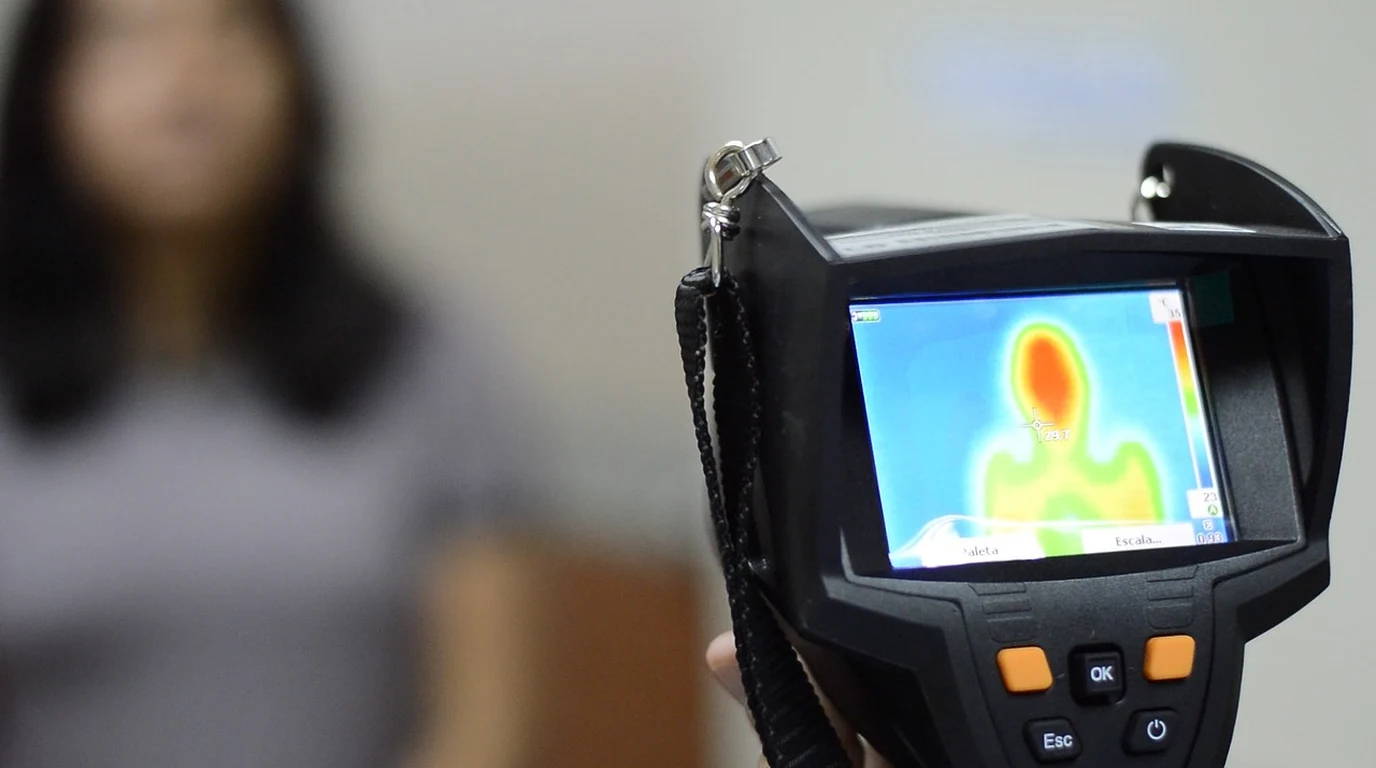
If you are responsible for securing the physical perimeter of a luxury residential estate, critical infrastructure compound, or rural homestead, you have likely encountered the severe physical limitations of conventional optical security cameras. Standard visible-light 4K cameras—regardless of how sophisticated their Sony Starvis low-light CMOS sensors, infrared (IR) night vision illuminators, or AI computer vision algorithms are—rely entirely on reflected photons. In pitch-black rural perimeters, heavy fog, torrential downpours, blowing snow, or dense tree foliage, optical sensors are blinded. Intruders wearing non-reflective camouflage or concealed behind landscape hedges simply disappear into background pixel noise, while spiders crawling across lenses, headlights passing in the distance, and swaying tree branches trigger relentless false positive motion alarms. The ultimate technological defense that renders darkness, camouflage, and adverse weather completely obsolete is Long-Wave Infrared (LWIR) Thermal Imaging. By detecting emitted thermal heat radiation rather than reflected light, thermal cameras transform physical security into a deterministic science. Here is Marcus Vance’s forensic surveillance engineering breakdown of Thermal Imaging PoE Cameras: FLIR (Teledyne FLIR Saros / Elara) versus Hikvision HeatPro Bi-Spectrum, Vanadium Oxide (VOx) sensor physics, Noise Equivalent Temperature Difference (NETD) ratings, bi-spectrum image fusion, and actionable perimeter defense design.
What Is the Difference Between Thermal and Optical PoE Cameras?
To understand the physics separating these systems, we must examine the electromagnetic spectrum and Planck’s Law of Blackbody Radiation. Every physical object in the universe with a temperature above absolute zero (-273.15°C) naturally emits infrared thermal radiation. The human body, maintaining an internal core temperature of 37°C (98.6°F) and a skin surface temperature of roughly 32°C to 34°C, emits peak thermal radiation in the Long-Wave Infrared (LWIR) spectrum between 8 and 14 micrometers (µm).
Optical cameras are completely blind to this radiation; their silicon photodiode arrays only respond to wavelengths between 400nm and 950nm. When an intruder hides behind a dense brush line at night, the brush reflects no visible photons, rendering the intruder invisible on standard 4K cameras. However, a thermal camera does not look for reflected light; it detects the thermal contrast between the 33°C heat signature of the intruder’s face and hands versus the 15°C ambient temperature of the foliage. The intruder glows on the thermal monitor like a lightbulb in a dark closet.
Microbolometer Physics: Vanadium Oxide (VOx) and NETD Sensitivity
Inside an uncooled thermal PoE camera sits a specialized sensor known as a Microbolometer Focal Plane Array (FPA). Unlike standard optical lenses made of glass (which is opaque to infrared wavelengths and absorbs thermal energy), thermal cameras utilize exotic optical elements ground from pure Germanium crystals, which are 100% transparent to LWIR radiation.
The Germanium lens focuses incoming thermal photons onto a microscopic grid of heat-sensitive resistors fabricated from Vanadium Oxide (VOx). When a thermal photon hits a VOx pixel, the pixel’s physical temperature increases slightly, causing a measurable change in its electrical resistance. A read-out integrated circuit (ROIC) measures these minute resistance shifts across the array, translating temperature variations into a real-time grayscale or color thermal video feed.
The single most critical benchmark of thermal sensor quality is Noise Equivalent Temperature Difference (NETD), expressed in milliKelvins (mK). NETD quantifies the smallest temperature difference the sensor can resolve above its own internal electronic noise floor:
- < 50mK NETD (Standard Commercial Grade): Resolves temperature differentials down to 0.05°C. Adequate for basic vehicle and pedestrian detection in clear weather, but loses contrast during “thermal crossover” events (when ambient ground temperature matches human skin temperature at dusk).
- < 35mK NETD (High-Performance Bi-Spectrum): Found in premium Hikvision HeatPro and FLIR systems. Resolves temperature differences down to 0.035°C. Captures fine anatomical details, wrinkles in clothing, footprints on cold grass, and cuts cleanly through dense marine fog.
- < 25mK NETD (Military / Critical Infrastructure): Ultra-high-sensitivity defense systems capable of detecting thermal heat plumes left on a chair minutes after someone stands up.
| Feature Comparison | Teledyne FLIR (Saros / Elara) | Hikvision HeatPro Bi-Spectrum | Architectural Impact |
|---|---|---|---|
| Regulatory & NDAA Compliance | 100% NDAA Section 889 Compliant | Banned from US Federal / NDAA sites | FLIR is mandatory for government/defense projects |
| Bi-Spectrum Image Fusion | Side-by-side or picture-in-picture | Dynamic Optical-Thermal Overlay | Hikvision blends 4K facial detail with thermal heat outline |
| Sensor Thermal Sensitivity (NETD) | < 35mK to < 25mK (Class-leading) | < 35mK (Exceptional for price) | Both deliver crisp thermal differentiation in fog/rain |
| Thermal Resolution Options | 320×240 up to 640×512 | 160×120 up to 256×192 / 384×288 | Thermal pixels are large; 256×192 easily detects at 150m |
| Price Point per Node | $2,500 – $6,000+ | $600 – $1,200 | Hikvision democratizes thermal for residential estates |
Bi-Spectrum Image Fusion: Combining Thermal Detection with 4K Detail
The monumental innovation in modern perimeter defense is Bi-Spectrum Image Fusion. While a thermal sensor excels at detecting a human heat signature at 300 meters in total darkness, a raw thermal image cannot show you the color of the suspect’s jacket, the license plate numbers on their vehicle, or their facial features for criminal prosecution.
Bi-Spectrum cameras solve this by packaging two complete, independent optical engines inside a single weatherproof housing: an uncooled VOx thermal sensor paired with a high-resolution 4-megapixel or 8-megapixel (4K) visible-light CMOS sensor. Sophisticated onboard DSP algorithms execute real-time bi-spectral pixel registration: the camera extracts high-contrast edge details (text, facial contours, clothing textures) from the optical sensor and dynamically fuses them onto the thermal heat map. The security operator sees an intuitive, color-enhanced image where humans and vehicles glow brightly in orange/white, while surrounding trees, signs, and physical structures retain crisp 4K visual clarity.
The 4:00 PM Actionable Implementation Playbook
To engineer a false-alarm-free thermal perimeter defense system for a private compound or commercial property, implement Marcus Vance’s deployment roadmap:
- Select the Proper Focal Length via Johnson’s Criteria: Thermal surveillance is governed by Johnson’s Criteria for Detection, Recognition, and Identification (DRI). A 3.2mm thermal lens provides a wide 50-degree field of view with human detection out to 50 meters (164 feet). If your fence line extends 150 to 200 meters (500–650 feet), specify a 10mm or 15mm telephoto Germanium lens to ensure at least 6 critical thermal sensor pixels cover the target for automated AI classification.
- Configure Hardware Tripwire Analytics on the Thermal Stream: Never bind your perimeter intrusion alarms to the optical stream. In your NVR or camera firmware (such as Frigate, Milestone, or Hikvision Smart Event), draw your virtual perimeter tripwire and intrusion zones strictly on the Thermal channel. Because thermal pixels only trigger on moving human/vehicle heat differentials, leaves blowing across the driveway, spiderwebs, and shadows will cause exactly zero false triggers.
- Integrate PTZ Target Tracking Hand-Off: In sprawling estate designs, pair a fixed Bi-Spectrum thermal camera with a high-speed optical Pan-Tilt-Zoom (PTZ) camera (such as an Axis or Dahua 30x optical zoom PTZ). Configure the fixed thermal camera as the “spotter.” The moment a human heat signature crosses the boundary line, the thermal camera transmits target GPS/coordinate vectors to the PTZ, which instantly slews to the target, illuminates an active white-light strobe, and locks onto the intruder with 4K optical facial tracking.
- Ensure Proper PoE+ Power Budgets: Bi-Spectrum thermal cameras incorporate internal Germanium lens defrosters, VOx sensor temperature stabilizers, and auxiliary strobe sirens. They routinely draw 15W to 22W under full heater load. Ensure your PoE switch ports are configured for IEEE 802.3at (PoE+) delivering up to 30W per port to prevent camera reboots during freezing winter nights.
Frequently Asked Questions
Can thermal cameras see through glass windows?
No. Standard glass is completely opaque to Long-Wave Infrared radiation (8 to 14 µm). A thermal camera looking at a glass window sees only the surface temperature of the glass or a thermal reflection of the camera itself; it cannot see into an illuminated room through a window.
Can intruders beat thermal cameras by wearing “space blankets” or foil suits?
In movies, burglars use Mylar emergency space blankets to block their heat. In the real world, this fails completely against modern bi-spectrum analytics. While a foil blanket temporarily reflects ambient temperature, it creates an unnatural “cold black void” against the warm earth. The camera’s AI identifies this void as an anomalous silhouette, triggering the intrusion alarm immediately.
Do thermal cameras require annual calibration?
Modern uncooled VOx microbolometers utilize automated internal mechanical shutters that click every few minutes to perform Non-Uniformity Correction (NUC). This internal NUC shutter recalibrates sensor pixel drift automatically, requiring zero manual recalibration throughout the camera’s 10-year operating lifespan.