
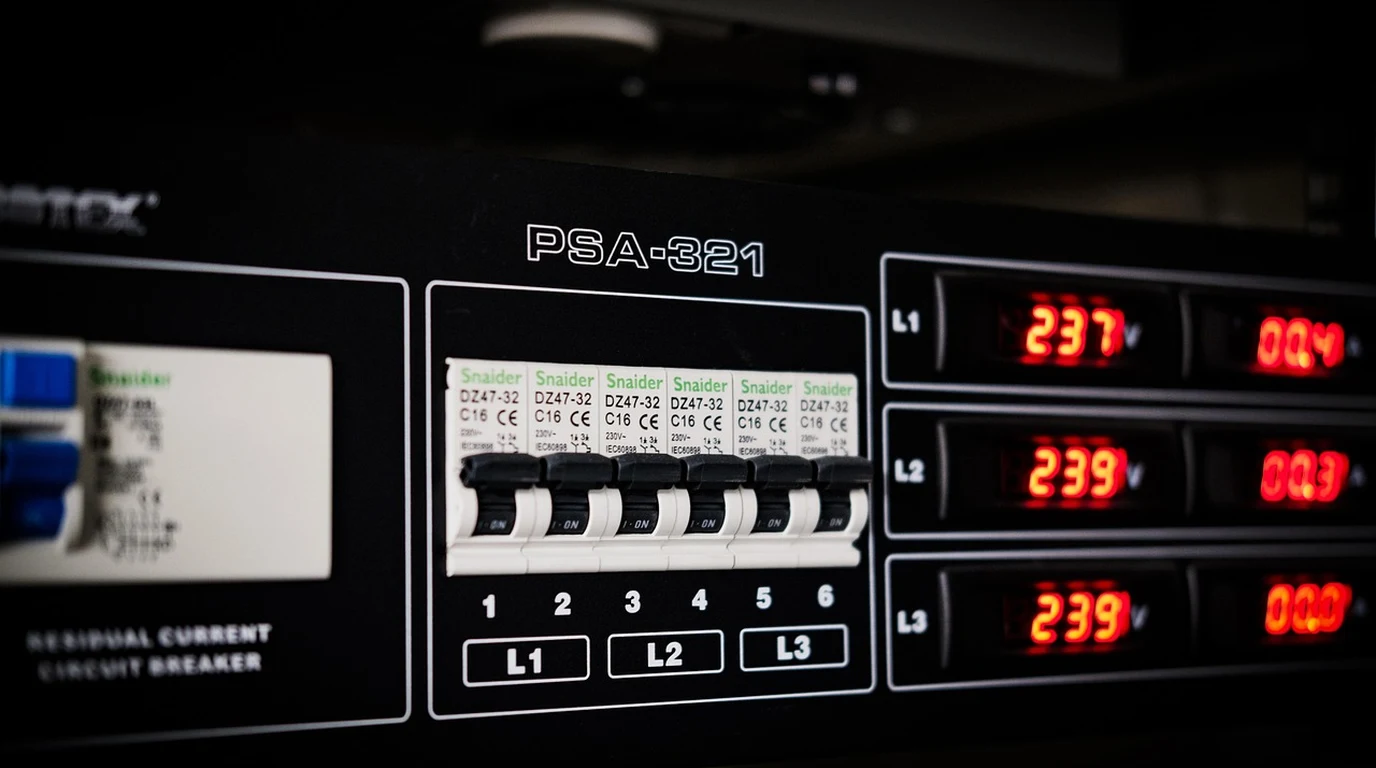
In high-end residential AV installations, smart home server racks, and custom home theaters, power quality is the silent determinant of system longevity and signal purity. Thousands of dollars are invested in reference-grade AV processors, multi-channel Class D power amplifiers, high-resolution OLED displays, and sensitive PoE network switches. Yet these expensive electronics are frequently plugged into basic $150 consumer battery backup units designed for desktop PCs. When power fluctuations occur—whether subtle brownouts, lightning voltage transients, or grid harmonics—these consumer units fail to isolate sensitive equipment. In professional systems integration, the debate centers on two enterprise architectures: Online Double-Conversion versus Line-Interactive Uninterruptible Power Supplies (UPS). Understanding transfer times, sine wave harmonic distortion, and electrical isolation is critical to shielding rack hardware against premature component degradation.
What Is the Difference Between Online Double-Conversion and Line-Interactive UPS?
Line-Interactive UPS units pass utility AC grid power directly to connected equipment through an automatic voltage regulation (AVR) buck/boost autotransformer, switching to battery via a mechanical relay in 4 to 12 milliseconds during a power failure. Online Double-Conversion UPS units continuously rectify incoming raw AC grid power into DC bus voltage and regenerate 100% clean, synthesized sine wave AC power through an internal inverter, delivering absolute electrical galvanic isolation with zero (0ms) transfer time.
To grasp why this distinction matters to AV hardware, consider the mechanical relay inside a Line-Interactive UPS. Under normal utility grid conditions, incoming wall electricity flows directly into your AV processor, network switch, and server power supplies. If the utility voltage drops (a brownout) or surges, the line-interactive autotransformer switches transformer taps to adjust voltage without engaging the battery. However, when utility power drops completely or experiences severe harmonic distortion, a mechanical relay must physically disengage from utility AC and connect the battery inverter. This mechanical switching action takes between 4 and 12 milliseconds. While standard PC ATX power supplies have internal hold-up capacitors capable of absorbing an 8ms outage, sensitive network switches, Dante audio bridges, and high-end video processors frequently crash, reboot, or introduce loud electrical pops through connected speakers during that transfer window.
Online Double-Conversion UPS systems operate on a completely different physical principle: there is no mechanical relay and no switching delay. Incoming AC utility power is immediately converted into clean direct current (DC) by an internal rectifier. This DC power continuously charges the internal battery array while simultaneously feeding a precision pulse-width modulated (PWM) inverter. The inverter reconstructs a pristine, brand-new 120V or 240V sine wave with less than 2% Total Harmonic Distortion (THD). The connected load never touches the utility electrical grid. If utility power is severed completely, the DC bus continues drawing power from the battery array with zero transfer time (0.0 ms), ensuring uninterrupted signal continuity.
Online Double-Conversion vs Line-Interactive: Engineering Comparison
Comparing electrical performance, operational acoustics, and protection profiles across UPS architectures:
| Performance Dimension | Line-Interactive UPS (e.g. APC Smart-UPS) | Online Double-Conversion (e.g. Eaton 9PX / APC SURT) | AV & Rack System Impact |
|---|---|---|---|
| Transfer Time to Battery | 4 ms to 12 ms (Mechanical Relay) | True Zero (0.0 ms Continuous Inverter) | Guarantees zero reboots on sensitive PoE switches & DSPs. |
| Output Voltage Waveform | Pure Sine Wave on battery; Raw AC on grid | Continuous Regenerated Sine Wave (<2% THD) | Eliminates AC line noise hum in high-end preamps. |
| Acoustic Fan Noise | Silent on grid; Fans engage only on battery | Constant Fan Noise (42 dB to 52 dB continuous) | Online units require dedicated AV equipment closets. |
| Electrical Efficiency | 95% to 98% High Efficiency | 88% to 94% (Double AC/DC conversion loss) | Online UPS produces more ambient heat in enclosed racks. |
| Hardware Acquisition Cost | $400 to $900 (1500VA Rackmount) | $1,400 to $3,200 (1500VA–3000VA Rackmount) | Line-interactive provides higher VA capacity per dollar. |
The Acoustic Noise Trap: Why You Cannot Put an Online UPS in a Living Room
While Online Double-Conversion UPS units offer superior electrical isolation, they possess a critical real-world drawback that shocks unprepared homeowners: continuous acoustic fan noise.
Because an Online UPS is constantly running its high-power internal AC-to-DC rectifier and DC-to-AC inverter 24 hours a day, 365 days a year, the power electronics generate significant internal heat. To prevent thermal degradation of the electrolytic capacitors and battery cells, high-CFM cooling fans must spin continuously. An entry-level 1500VA Online UPS emits between 45 dBA and 55 dBA of high-pitched fan noise at all times—comparable to a commercial enterprise server rack.
If your smart home rack or AV equipment is installed inside a media console in the living room, master bedroom, or open-concept living area, installing an Online Double-Conversion UPS will completely ruin the acoustic noise floor of the room. Online units belong strictly inside dedicated, climate-controlled equipment rooms, basements, or soundproofed utility closets.
Battery Chemistries: Sealed Lead-Acid (VRLA) vs Lithium Iron Phosphate (LiFePO4)
Entering 2026, the rackmount UPS market is undergoing a seismic shift in energy storage. Traditional Valve-Regulated Lead-Acid (VRLA/AGM) batteries are notoriously short-lived: they endure only 300 to 500 charge cycles, degrade rapidly in rack temperatures exceeding 25°C (77°F), and require complete physical battery pack replacements every 3 to 4 years.
Modern enterprise UPS units (such as the APC Smart-UPS Ultra or Eaton 9PX Lithium-Ion) utilize Lithium Iron Phosphate (LiFePO4) chemistry:
- 10-Year Operational Lifespan: LiFePO4 batteries deliver over 3,000 to 5,000 full discharge cycles, outlasting lead-acid by more than 8x and matching the full operational lifespan of the UPS chassis itself.
- Thermal Resilience: Operates reliably at elevated temperatures (up to 40°C / 104°F) without accelerating internal chemical degradation.
- 50% Weight Reduction: A standard 2U lead-acid UPS weighs over 60 lbs (27 kg), straining rack rails. A LiFePO4 2U unit weighs just 32 lbs (14.5 kg), simplifying single-person rack installations.
- Ultra-Fast Recharge: LiFePO4 cells recharge from 0% to 90% in under 90 minutes, compared to 6 to 12 hours for lead-acid batteries.
Integrator’s Systems Checklist: Power Architecture Rules
Professional Rack Power Engineering Protocol
- Quarantine Class D Power Amplifiers: Never plug heavy multi-channel power amplifiers into an undersized UPS battery output. High-transient audio peaks can exceed the UPS inverter’s crest factor limits, triggering an overload shutdown. Plug power amplifiers into a dedicated high-current surge suppressor (such as a Furman Prestige SMP series) or a dedicated 3000VA UPS branch.
- Deploy Online Units in Dedicated Closets: Utilize Online Double-Conversion UPS for core enterprise network stacks, NAS storage arrays, and home automation controllers situated in sound-isolated utility closets.
- Deploy Pure Sine Wave Line-Interactive in Living Zones: For open living spaces, use high-grade Line-Interactive units with Pure Sine Wave output (such as the CyberPower CP1500PFCLCD or APC SMT1500RM2UC), ensuring zero acoustic fan noise during standard operation.
- Calculate VA vs Watt Realities: Always size your UPS load to operate below 70% of maximum rated wattage capacity to prevent inverter thermal strain and guarantee at least 15–20 minutes of clean shutdown runtime.
Frequently Asked Questions About AV Rack Power Protection
Can a simulated sine wave UPS damage audio equipment?
Yes. Stepped or simulated sine wave UPS units generate square-wave harmonic noise that causes electromagnetic hum in audio transformer coils, overheats power supplies, and can induce clicking noises in delicate preamplifiers.
What is the difference between VA and Watts on a UPS specification sheet?
Volt-Amps (VA) measures apparent power (voltage multiplied by current), while Watts measures real power dissipated. The ratio is the Power Factor (PF). High-end enterprise UPS units have a Power Factor of 0.9 to 1.0, meaning a 1500VA unit delivers 1,350 to 1,500 real Watts.
How often should rack UPS batteries be replaced?
Traditional lead-acid (VRLA) batteries must be replaced every 3 to 4 years. Modern Lithium Iron Phosphate (LiFePO4) UPS battery modules operate reliably for 8 to 10 years without replacement.
Acoustic Noise Floor & Equipment Room Sizing
Rack fan acoustics directly dictate equipment closet isolation and cooling requirements. Review acoustic isolation protocols in our masterclass on Dirac Live vs Audyssey MultEQ-X: Room Correction Test.