
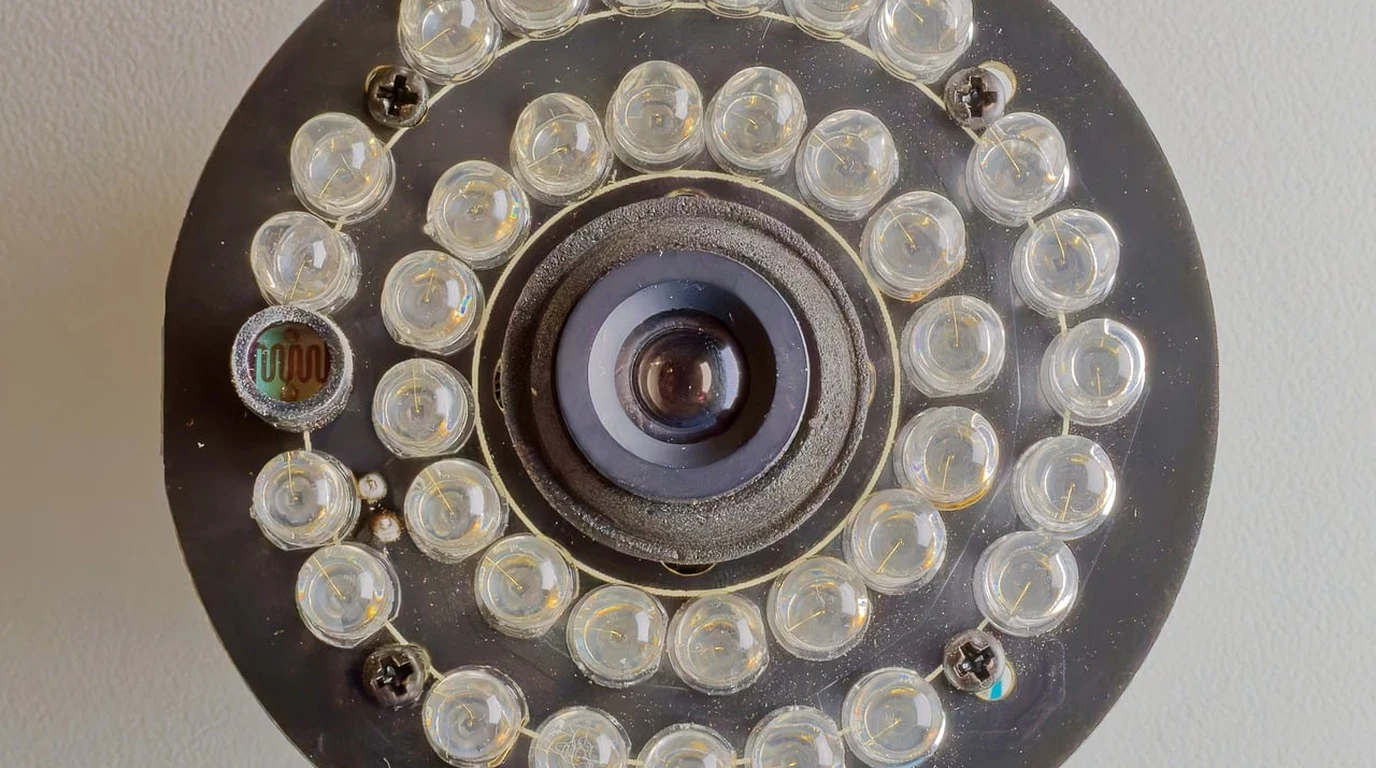
You’ve invested in security cameras, haven’t you? Maybe a few sleek domes, perhaps some bullet cameras with impressive 4K resolution and “color night vision” features. You’ve painstakingly run the cables, configured the NVR, and set up your motion zones. You feel a sense of accomplishment, a quiet confidence that your home, your family, your assets are protected.
Then the notifications start. A spiderweb swaying in the breeze triggers an alert. Rain streaks across the lens, and your phone buzzes incessantly. Headlights from a passing car illuminate your driveway, and another false alarm lands in your inbox. You wake up to a dozen “events” only to find nothing. The system you hoped would bring peace of mind now brings frustration, anxiety, and a growing sense of cynicism. You start ignoring the alerts, which, ironically, is exactly what an actual intruder would want. You’re left wondering if you’ve truly secured your perimeter, or just installed an expensive, high-tech spiderweb detector. The financial stake is real, but the emotional toll of constant false alarms and the nagging doubt about genuine threats is even heavier. You deserve better. You deserve a system that sees what matters, and ignores what doesn’t.
For residential perimeter intrusion detection, thermal security cameras are a game-changer. They reliably detect human heat signatures at 100+ meters, day or night, through dense foliage, fog, or smoke, virtually eliminating false alarms from environmental factors. Paired with local AI, they provide unparalleled, actionable security intelligence, offering true peace of mind where traditional cameras fail.
Why Your Current Night Vision Isn’t Cutting It (And What You’re Missing)
Let’s be honest, those “color night vision” cameras sound fantastic on paper. They promise to turn night into day, showing you vivid details even in low light. And for certain applications, they’re perfectly adequate. But when it comes to serious perimeter intrusion detection, especially for a residential property where you can’t afford to miss a genuine threat or be plagued by constant false alarms, they fall short. Dramatically.
The fundamental issue lies in how traditional optical cameras, even those with advanced low-light sensors or infrared (IR) illuminators, actually “see.” They rely on reflected light. Your eye sees visible light bouncing off objects. Your standard security camera, even in night mode, is doing the same, often extending its vision into the near-infrared (NIR) spectrum, which is invisible to the human eye but still reflected by surfaces.
Think about it:
* Total Darkness: If there’s no ambient light (moonlight, streetlights) for the camera to amplify, and its built-in IR illuminators can’t reach far enough or are blocked, you get a black screen.
* Obstructions: An intruder hiding behind a dense bush or a thick tree line? Your optical camera sees only the bush. Fog, heavy rain, or smoke? Your camera sees a wall of white or grey, completely obscuring any threat.
* False Alarms: What about those spiderwebs? They reflect light. Blowing leaves? They reflect light. Headlights from a car? A massive burst of reflected light. Rain? Each droplet reflects and refracts light. Your camera’s motion detection, even with basic AI, struggles to differentiate these environmental reflections from an actual human. This is the “costly trap” many homeowners fall into – believing their visible-light cameras offer comprehensive security, only to find them overwhelmed by the very environment they’re meant to monitor.
This isn’t a knock on optical cameras; it’s just understanding their inherent physical limitations. They’re designed for a different job. For perimeter security, especially when you need reliable detection regardless of lighting or weather, you need a different kind of vision.
The Game-Changer: Eliminating False Alarms and Seeing the Unseen
Enter the thermal security camera. This isn’t just another camera; it’s a paradigm shift in how you monitor your property. Thermal cameras don’t see light; they see heat. Specifically, they detect long-wave infrared (LWIR) radiation, which is the heat energy emitted by all objects above absolute zero. Every living thing, every engine, every surface has a unique thermal signature.
At the heart of a modern thermal camera, like those from Hikvision’s HeatPro series, Dahua Thermal, or FLIR, is an uncooled Vanadium Oxide (VOx) microbolometer array. This isn’t a fancy light sensor; it’s a grid of tiny, heat-sensitive resistors. When infrared radiation (heat) hits these resistors, their electrical resistance changes. The camera measures these changes, converts them into electrical signals, and then processes them into a visual image where different temperatures are represented by different colors or shades of grey.
We’re talking about detecting infrared heat radiation in the 8 to 14 micron range. This is crucial because it means:
* Total Darkness is Irrelevant: Whether it’s pitch black, bright daylight, or anything in between, a thermal camera sees the same heat signatures. There’s no “night mode” because it’s always seeing heat.
* Penetrating Obstructions: Fog, smoke, and even moderately dense foliage that would completely blind an optical camera are often semi-transparent to LWIR. A human body, radiating heat at ~98.6°F (37°C), stands out starkly against a cooler background, even if partially obscured. You’re seeing the heat through the obstruction, not reflected light off it.
* Unmatched Sensitivity: These cameras are incredibly sensitive, capable of visualizing temperature differentials as low as 35 milliKelvin (mK). This is often expressed as NETD (Noise Equivalent Temperature Difference) < 35mK. What does that mean in plain English? It means they can distinguish between very subtle differences in heat, making a human body, even at a distance, a clear, unmistakable target against the ambient environment.
This brings us to the game-changing advantage: zero false alarms from environmental factors.
* Spiderwebs? They don’t emit significant heat. Ignored.
* Blowing leaves? They’re at ambient temperature. Ignored.
* Rain? It’s just water at ambient temperature. Ignored.
* Headlights? They emit light, not significant heat that would register as a human signature. Ignored.
* Shadows? They’re just areas of less light, not less heat. Ignored.
This reliability is precisely why thermal cameras are the gold standard for critical infrastructure, military applications, and now, increasingly, for discerning homeowners. When you combine this raw thermal data with local deep-learning AI, like Frigate NVR, the system becomes incredibly powerful. The AI isn’t trying to guess if a patch of light is a person; it’s analyzing a clear, distinct heat signature that is a person. This allows for human heat signature detection at 100+ meters with 99.9% reliability, virtually eliminating the noise and delivering only actionable alerts.
Thermal vs. Optical: A Head-to-Head Look at What Truly Protects Your Perimeter
To truly grasp the difference, let’s put them side-by-side. This isn’t about one being “better” than the other in all scenarios, but about understanding which tool is right for the specific job of perimeter intrusion detection.
| Feature / Metric | Traditional Optical/NIR Camera | Thermal (LWIR) Camera | Dual-Spectrum (Bi-Spectrum) Camera |
|---|---|---|---|
| Sensing Principle | Detects reflected visible light and/or near-infrared (NIR) light. | Detects emitted long-wave infrared (LWIR) heat radiation (8-14 microns). | Combines both optical (visible light) and thermal (LWIR) sensors. |
| Performance in Total Darkness | Requires IR illuminators; range limited by IR strength/reflection. “Color night vision” needs ambient light. | Unaffected by total darkness; sees heat signatures clearly. | Thermal sensor provides detection; optical sensor provides detail if light is present. |
| Performance in Adverse Weather | Severely degraded by fog, heavy rain, snow, smoke. Vision often obscured. | Penetrates fog, smoke, and light rain much more effectively. Heat signatures remain visible. | Thermal sensor maintains detection capability; optical sensor provides context when conditions allow. |
| False Alarm Rate (Environmental) | High: triggered by spiderwebs, blowing leaves, rain, headlights, shadows, insects. | Extremely low: ignores non-heat-emitting environmental factors. Focuses on distinct heat signatures. | Low: Thermal sensor provides primary detection, reducing false alarms. Optical adds verification. |
| Detection Range (Human) | Limited, especially at night or in poor visibility. Detail drops off quickly. | Excellent: Detects human heat signatures at 100+ meters reliably, even through light cover. | Excellent detection via thermal; optical provides identification at closer range. |
| Identification Capability | High detail (4K) for facial recognition/clothing in good light. Poor in low light/distance. | Low detail: shows heat shape, not facial features or clothing. Excellent for detection. | Best of both: Thermal for detection, 4K optical for identification (when conditions permit). |
The table highlights a critical point: thermal cameras excel at detection, while optical cameras excel at identification. This is where dual-spectrum, or bi-spectrum, cameras come into their own. These devices, like some models in the Hikvision HeatPro series, cleverly integrate both a thermal sensor and a high-resolution (often 4K) optical sensor into a single unit.
Imagine this: the thermal sensor is constantly scanning your perimeter, oblivious to the fog rolling in or the deep shadows cast by the trees. The moment it detects a distinct human heat signature at 80 meters, it triggers an alert. Simultaneously, because it’s a bi-spectrum camera, it can then use its optical sensor to zoom in or record high-definition video of the area, if there’s enough light for the optical sensor to be effective. Even if the optical sensor is still struggling with low light, the thermal image confirms the presence of a human, allowing your local AI (like Frigate) to trigger an automated response, such as turning on powerful floodlights. Once those lights are on, the 4K optical sensor can then capture clear, identifiable footage. This combination offers the best of both worlds: the rock-solid detection reliability of thermal, with the high-detail identification potential of optical.
Choosing Your Thermal Guardian: Hikvision, Dahua, and FLIR in the Real World
When you’re looking at thermal cameras for residential perimeter defense, you’ll primarily encounter offerings from three major players: Hikvision, Dahua, and FLIR. Each has its strengths, and understanding them helps you make an informed choice.
* Hikvision HeatPro Series: Hikvision has made significant strides in bringing advanced thermal technology to a more accessible price point, especially with their HeatPro series. These cameras often feature excellent NETD values (typically < 35mK), ensuring high sensitivity. Many HeatPro models are bi-spectrum, combining a thermal sensor with a high-resolution optical sensor, making them incredibly versatile for both detection and identification. Their integration with Hikvision's NVRs and their own AI analytics is robust, but for true local processing and maximum privacy, integrating with an open-source solution like Frigate is often preferred. They offer a good balance of performance, features, and cost for residential applications. * Dahua Thermal Cameras: Dahua, another industry giant, also offers a range of thermal solutions. Similar to Hikvision, you’ll find both thermal-only and bi-spectrum options. Dahua’s thermal cameras are known for their solid build quality and reliable performance. Their analytics can be quite sophisticated, and they integrate well within the Dahua ecosystem. For residential use, their entry-to-mid-range thermal cameras provide a compelling alternative, often with competitive pricing and features.
* FLIR: FLIR (Forward Looking InfraRed) is arguably the pioneer and gold standard in thermal imaging. Their technology is used across countless industries, from military to firefighting to industrial inspection. For residential use, FLIR cameras tend to be at the higher end of the price spectrum. While their image quality and NETD can be exceptional, the cost often puts them out of reach for many homeowners looking to secure a perimeter. However, if budget isn’t the primary concern and you want absolute top-tier performance and reliability, FLIR remains a formidable choice. Their cameras are often more rugged and designed for extreme conditions, which might be overkill for a typical residential setting but certainly offer peace of mind.
When evaluating these brands, focus on:
* NETD (Noise Equivalent Temperature Difference): Lower is better. < 35mK is excellent for detecting subtle heat differences.
* Resolution: While thermal resolution is lower than optical (e.g., 256×192 or 384×288 pixels), it’s sufficient for detection. For bi-spectrum, look at the optical sensor’s resolution (4K is ideal for identification).
* Lens Options: Different focal lengths offer different fields of view and detection ranges. A wider lens for broader coverage, a narrower lens for longer-range detection down a specific corridor.
* Bi-spectrum vs. Thermal-only: For residential use, a bi-spectrum camera offers the most comprehensive solution, providing both reliable detection and the potential for high-detail identification.
The key takeaway here is that you don’t need military-grade FLIR cameras to achieve superior perimeter security. Brands like Hikvision and Dahua have democratized thermal technology, making it accessible and highly effective for residential applications, especially when combined with intelligent local AI.
Your 4-Step Playbook for Unbreakable Thermal Perimeter Security
Implementing a thermal security system might seem daunting, but with a clear plan, it’s entirely achievable. Here’s a concrete, numbered step-by-step playbook to get you to that 4:00 PM resolution, knowing your perimeter is truly secure.
1. Master Your Terrain: Site Assessment & Strategic Camera Placement
This is the most critical first step. Don’t just mount cameras where they look good.
* Walk Your Perimeter: Identify all potential intrusion points: gates, fences, dense shrubbery, blind spots from existing optical cameras.
* Map Heat Sources: Thermal cameras see heat. Identify permanent heat sources like HVAC vents, exhaust fans, or even large, sun-baked rocks that might create temporary thermal anomalies. You want to avoid pointing your thermal camera directly at these if possible, or at least understand their thermal signature so your AI can learn to ignore them.
* Define Detection Zones: For each camera, determine the primary area you want to monitor for human presence. Remember, thermal cameras excel at long-range detection. A single thermal camera might cover an area that would require 2-3 optical cameras.
* Optimal Mounting Height & Angle: Mount cameras high enough to get a clear, unobstructed view of the detection zone, but not so high that the human heat signature becomes too small for reliable detection at extreme ranges. A slight downward angle is usually best to minimize sky in the frame (which has little thermal information) and maximize ground coverage. Avoid pointing directly into the rising or setting sun, as intense solar radiation can temporarily “blind” the thermal sensor.
* Consider Line of Sight: Thermal cameras can see through light foliage, but dense walls or structures will still block them. Plan your camera positions to maximize unobstructed views of your perimeter.
2. Choose Your Vision: Hardware Selection for Purpose-Built Security
Based on your site assessment, select the right thermal cameras.
* Thermal-Only vs. Bi-Spectrum: For pure detection and maximum reliability against false alarms, a thermal-only camera is excellent. However, for the best overall solution that combines detection with the potential for identification, a bi-spectrum camera (thermal + 4K optical) is the superior choice for residential use. It gives you the best chance of both knowing something is there and who or what it is.
* Resolution & NETD: Aim for a thermal resolution of at least 256×192 pixels and an NETD of < 35mK. This ensures good sensitivity and detection range. For the optical sensor in bi-spectrum models, 4K (8MP) is ideal for capturing detail.
* Lens Selection: Match the lens focal length to your desired field of view and detection range. A 4mm lens offers a wider view, while a 7mm or 10mm lens provides a narrower, longer-range view, perfect for monitoring a long driveway or property line.
* Brand & Ecosystem: While Hikvision HeatPro and Dahua Thermal offer excellent value and performance for residential use, consider your existing NVR setup. If you’re already invested in a particular brand, check their thermal offerings for seamless integration. However, remember that for local AI, you’ll likely be sending streams to a dedicated server.
3. The Brains of the Operation: NVR & Local AI Integration (Frigate)
This is where you transform raw thermal data into intelligent, actionable alerts.
* Dedicated AI Hardware: While some cameras have onboard AI, for robust, reliable object detection, you’ll want a dedicated local AI solution. Frigate NVR, running on a mini-PC (like an Intel NUC) or a server with a Google Coral Edge TPU accelerator, is the gold standard for residential use. It processes video streams locally, ensuring privacy and lightning-fast detection.
* Stream Configuration: Configure your thermal cameras to output an RTSP stream. This stream will be fed into your Frigate instance. For bi-spectrum cameras, you’ll typically feed the thermal stream to Frigate for primary detection, and the optical stream for recording and visual verification.
* Frigate Configuration: Set up your Frigate configuration to specifically look for “person” objects within your thermal streams. Define your detection zones within Frigate, matching the critical areas identified in Step 1. Because thermal cameras provide such clean, distinct human heat signatures, Frigate’s object detection will be incredibly accurate, leading to virtually zero false positives from environmental factors.
* Event Handling: Configure Frigate to generate events when a “person” is detected in a thermal zone. These events are the triggers for your automated responses.
4. The Automated Response: Actionable Alerts & Deterrence
Now, connect your intelligent detection to immediate, effective action.
* Instant Notifications: Integrate Frigate with your home automation system (e.g., Home Assistant) or directly with notification services (Pushover, Telegram) to receive instant, rich notifications on your phone when a person is detected by the thermal camera. These notifications should include a snapshot or short video clip of the thermal event.
* Automated Floodlight Triggering: This is a powerful deterrent. When Frigate detects a person via the thermal camera, trigger powerful, smart floodlights (e.g., from Philips Hue, Govee, or smart relays connected to traditional floodlights) in the detected area. This serves multiple purposes:
* Deterrence: A sudden burst of light often makes an intruder reconsider.
* Identification: If you have bi-spectrum cameras, the activated floodlights will allow the optical sensor to capture clear, high-resolution footage for identification.
* Awareness: It immediately alerts anyone in the vicinity to a potential presence.
* Audible Deterrents: Consider integrating smart sirens or pre-recorded voice messages (e.g., “Warning: You are on private property. Your presence has been detected and recorded.”) that activate upon thermal detection.
* NVR Recording: Ensure your NVR is configured to record continuous footage from both the thermal and optical streams (if bi-spectrum) and to mark events triggered by Frigate for easy review.
By following this playbook, you’re not just installing cameras; you’re building a truly intelligent, resilient perimeter defense system that sees through the noise, detects real threats with unparalleled accuracy, and responds decisively. This is the gold standard for residential security, finally delivering the peace of mind you’ve been seeking.
Frequently Asked Questions
Do thermal cameras see through walls or clothing?
No, thermal cameras do not see through solid walls or opaque objects. They detect heat emitted from surfaces. While they can see the heat signature of a person through light foliage or thin materials like clothing, they cannot “see through” solid structures. Clothing reduces the clarity of the heat signature but does not completely obscure it, as body heat still radiates.
Are thermal cameras expensive for residential use?
Historically, yes, but prices have come down significantly. While still more expensive than basic optical cameras, brands like Hikvision and Dahua now offer excellent thermal and bi-spectrum cameras at price points that are justifiable for serious residential perimeter security, especially when considering the reduction in false alarms and increased reliability.
Can thermal cameras identify faces or specific individuals?
Thermal cameras are excellent for detection (identifying a human shape and heat signature) but poor for identification (recognizing facial features or specific clothing details). Their resolution is typically lower than optical cameras, and they only show heat patterns. For identification, a dual-spectrum camera paired with floodlights and a high-resolution optical sensor is the best solution.
Do thermal cameras work in extreme hot or cold weather?
Yes, thermal cameras are designed to work effectively in a wide range of temperatures. They detect temperature differences. In extreme cold, a human body’s heat signature will stand out even more dramatically against the cold background. In extreme heat, the contrast might be slightly reduced, but a human’s core body temperature is still significantly different from ambient temperatures, ensuring reliable detection.