
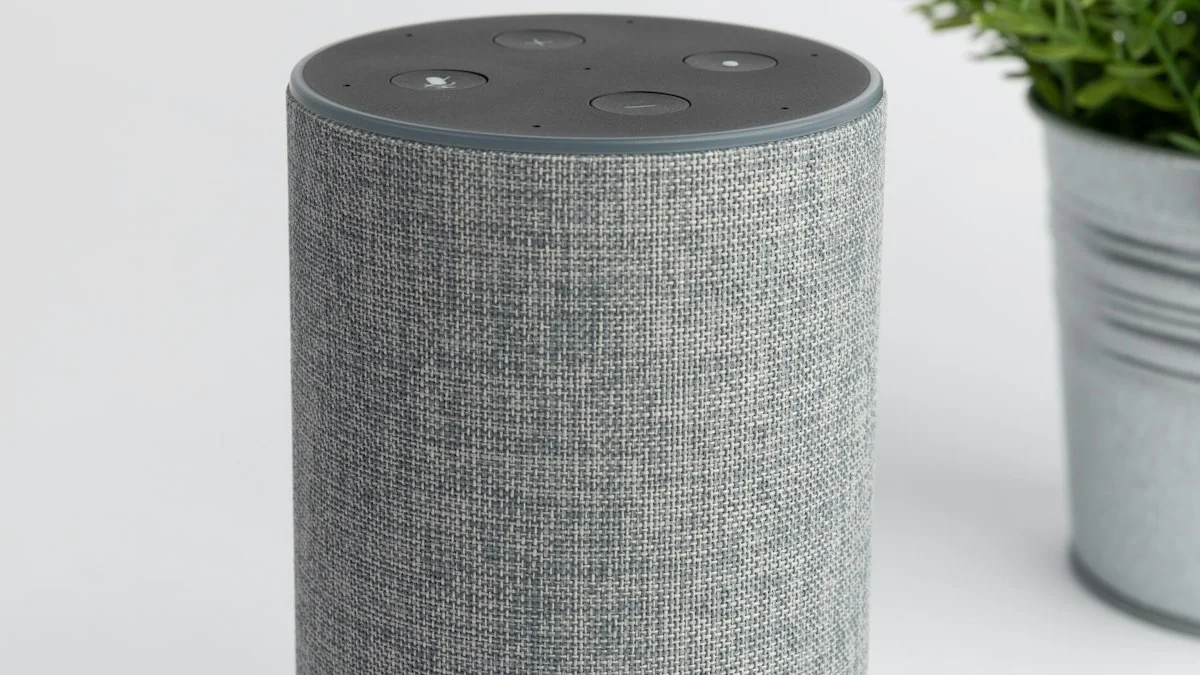
Commercial cloud voice assistants like Amazon Alexa and Google Assistant have deteriorated from convenient smart home interfaces into aggressive advertising engines, privacy intrusion vectors, and latency bottlenecks. With tech conglomerates deprecating third-party developer skills and inserting sponsored suggestions after simple light switch commands, the smart home community has rallied around the “Year of the Voice.” Deploying 100% private, self-hosted voice processing with Home Assistant and Whisper AI restores total data sovereignty, but requires careful architectural balance between local inferencing compute and speech recognition latency.
Can Local Whisper AI Voice Match the Speed of Cloud Voice Assistants?
The Home Assistant Voice Pipeline consists of four distinct architectural stages executing in rapid sequence: Wake Word Detection, Speech-to-Text (STT), Intent Recognition, and Text-to-Speech (TTS). In commercial cloud systems, an unencrypted audio snippet triggered by your wake word is compressed and transmitted across the public internet to hyperscale data centers for cloud neural processing. In Home Assistant’s local architecture, the entire pipeline executes either on the edge device itself (via microWakeWord) or across an isolated local area network server via the Wyoming protocol.
Beat 2: The Costly Trap & Architectural Nuance Matrix
The most common pitfall when building a private voice assistant is attempting to run OpenAI’s raw floating-point Python Whisper models directly on an underpowered CPU (such as a Raspberry Pi 4 or entry-level mini PC). Raw Whisper small or medium models running on generic x86 or ARM CPU cores consume 100% processor utilization, generating 4 to 8 seconds of inferencing latency. Waiting five seconds for a room light to turn on destroys user adoption and frustrates family members.
The solution is running faster-whisper (a reimplementation utilizing CTranslate2) configured with 8-bit integer quantization (INT8) running on dedicated hardware accelerators (such as an Intel N100 OpenVINO engine, an Nvidia GPU with TensorRT, or a Rockchip RK3588 NPU). This slashes inference latency by 85% while maintaining near-perfect transcription accuracy.
| Pipeline Architecture | Cloud Voice (Alexa / Google) | Local Whisper (faster-whisper INT8) | User Experience & Privacy Impact |
|---|---|---|---|
| Execution Latency | 1,200ms – 2,500ms (Internet-bound) | 450ms – 800ms (Local NPU / GPU) | Local execution delivers instantaneous responsiveness |
| Data Privacy & Telemetry | Audio retained on corporate servers | 100% Air-gapped on local LAN | Zero audio profiling or targeted advertising |
| Internet Outage Survival | Fails completely (Red ring error) | 100% Operational (LAN execution) | Lights and HVAC remain controllable during ISP downtime |
| Wake Word Technology | Fixed Proprietary (“Alexa”, “Hey Google”) | Custom Trained microWakeWord | Customize wake words (“Hey Jarvis”, “Computer”) |
| Hardware Satellites | Locked proprietary hardware pucks | ESP32-S3 Box, Atom Echo, Raspberry Pi | $15 – $40 open-source edge hardware |
Field Installation & Hardware Commissioning Protocol
To configure a rock-solid, sub-second local voice assistant ecosystem in your home today, execute this four-step engineering blueprint:
- Deploy Wyoming faster-whisper on Local Compute: In Home Assistant, install the Wyoming faster-whisper add-on. If running Home Assistant OS on x86 hardware (such as an Intel 12th/13th Gen mini PC), select the
tiny-int8orbase-int8English model and set beam size to 1. This configuration reduces memory footprint to under 400 MB while delivering transcription latencies under 250 milliseconds. - Implement Piper for Natural Offline TTS: Pair faster-whisper with the Wyoming Piper add-on for local speech synthesis. Piper utilizes high-performance VITS neural text-to-speech models, generating fluid, human-like voice responses with real-time factors exceeding 5x on modern CPU cores. Select medium-quality models (such as
en_US-lessac-medium) for the optimal balance of acoustic warmth and execution speed. - Deploy ESP32-S3 microWakeWord Satellites: Build room satellites using ESP32-S3 hardware (such as the ESP32-S3-BOX-3 or M5Stack CoreS3) running ESPHome. Configure on-device wake-word detection using the
micro_wake_wordcomponent. The ESP32-S3 processes audio continuously inside its local circular buffer; when the wake word is detected, it streams high-quality 16 kHz uncompressed PCM audio directly to your Home Assistant Wyoming server over local Wi-Fi. - Leverage Sentence Matching Before LLMs: Configure Home Assistant’s native intent engine (Hassil) to parse standard home control commands (“turn off the living room lights”, “set thermostat to 70 degrees”). Built-in sentence matching processes in under 5 milliseconds with 100% deterministic accuracy. Reserve heavy local Large Language Models (like Llama-3 or Mistral running on Ollama) exclusively as fallbacks for general knowledge queries.
Acoustic Far-Field Microphone Array Engineering
The primary reason commercial smart speakers perform well in noisy environments is hardware acoustic front-end (AFE) processing: hardware acoustic echo cancellation (AEC), beamforming microphone arrays, and background noise suppression. When choosing or building local voice satellites, prioritize hardware equipped with dual microphone arrays and dedicated DSP audio codecs (such as the ES7210 ADC). Position satellites at least 3 feet away from television speakers or ventilation ducts to prevent microphone clipping during high ambient sound events. Designing proper acoustic decoupling into your edge satellites guarantees near-perfect wake word accuracy across busy household environments.
Local Large Language Model (LLM) Hybrid Routing
While standard voice pipelines excel at deterministic device control (“turn on kitchen pendant lights”), complex conversational requests or contextual home queries require Large Language Model intelligence. Modern Home Assistant Voice architectures achieve the best of both worlds by implementing dual-stage intent routing. Local sentence parsers evaluate incoming speech transcripts in under 5 milliseconds; if the request matches an existing smart home entity command, it executes immediately without touching an LLM.
If the command represents an open-ended conversational query (“Which windows are currently open upstairs and what is the outdoor humidity?”), Home Assistant routes the prompt to a local Ollama server running a quantized 8-billion parameter model (such as Llama 3.1 8B Instruct or Mistral Nemo) hosted on an internal GPU server. Using Home Assistant’s native function-calling API (Assist API), the local LLM inspects current room states, formulates a concise plain-text answer, and streams the output directly to the Piper TTS engine in under 900 milliseconds. This hybrid local approach maintains sub-second responsiveness for everyday lighting control while offering sophisticated conversational AI with zero cloud subscription fees or corporate data harvesting.
📐 Related Audio/Video Systems Investigation: ReSpeaker vs M5Stack Atom Echo: Local Voice Satellites
Before building and placing your room microphone satellites, review our architectural breakdown comparing local Whisper neural models against cloud voice services:
👉 Read the Full Masterclass: ReSpeaker vs M5Stack Atom Echo: Local Voice Satellites »