
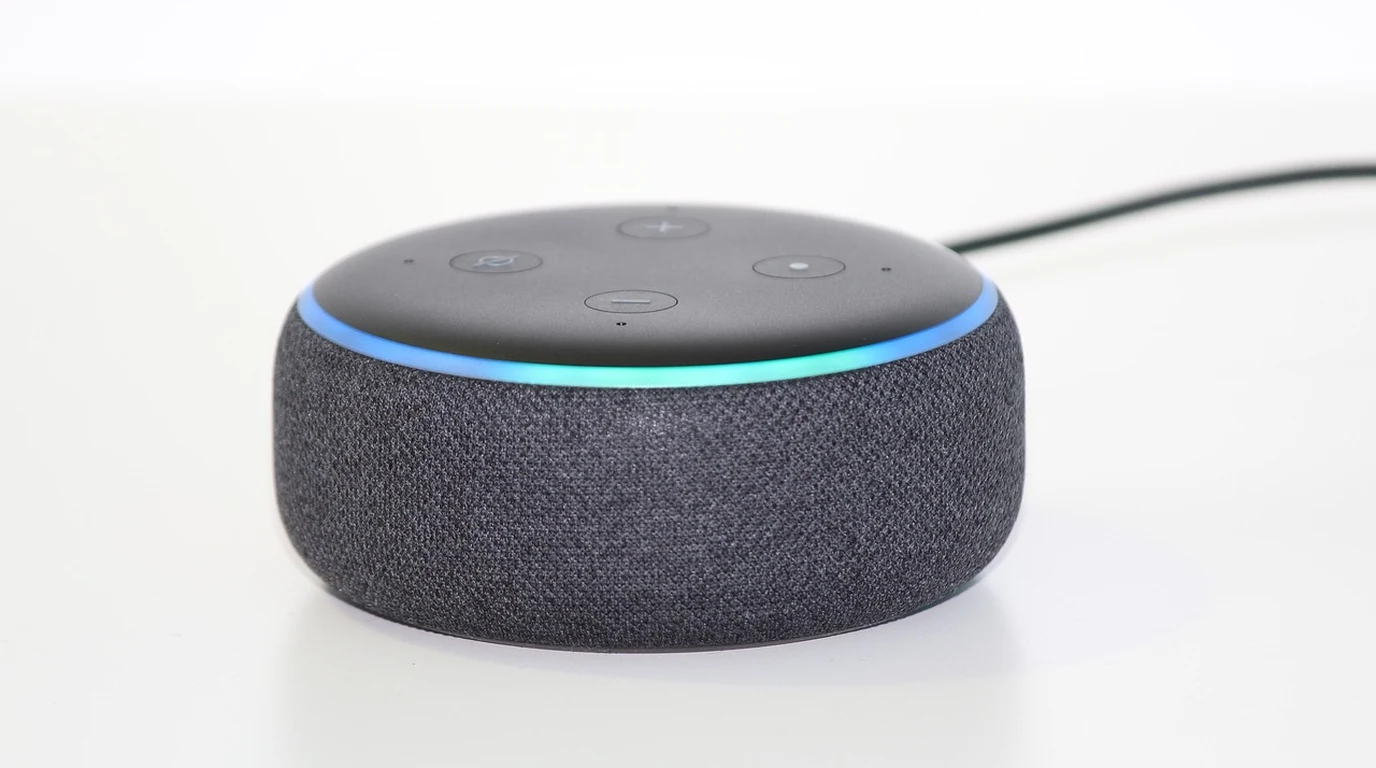
Smart home voice assistants have reached an existential turning point. Millions of households have become thoroughly disillusioned with proprietary commercial smart speakers (Amazon Alexa, Google Home) due to invasive privacy practices, intrusive advertising insertions, and unpredictable cloud service deprecations. In the open-source ecosystem, Home Assistant’s “Year of the Voice” has matured into a robust, completely local, zero-cloud voice pipeline powered by Whisper (Speech-to-Text) and Piper (Text-to-Speech). However, building room satellites requires selecting the optimal client hardware: an ultra-compact ESP32 microcontroller or a Raspberry Pi Zero 2 W micro-computer.
What Is the Difference Between ESP32 and Pi Zero 2 W Voice Satellites?
The Edge AI Voice Verdict:
ESP32 voice satellites (such as the ESP32-S3-BOX-3) run lightweight ESPHome firmware that streams raw I2S microphone audio directly to your Home Assistant server, consuming under 1 Watt of power with instant sub-second boot times. A Raspberry Pi Zero 2 W runs a full Linux OS with Wyoming Satellite, allowing local on-device wake-word detection (openWakeWord) and advanced hardware DSP echo cancellation, but requires more power, microSD management, and 30-second boot cycles.
The engineering trade-off centers on where the wake word executes. In a privacy-first smart home, a voice satellite must continuously listen to ambient room audio, but it must NEVER stream audio to a server until a specific trigger phrase (“Hey Jarvis”, “Okay Nabu”) is spoken.
The Raspberry Pi Zero 2 W possesses a quad-core 64-bit ARM Cortex-A53 processor with 512MB of RAM. This provides enough local compute to run openWakeWord directly on the satellite itself using quantized neural network models. The Pi Zero processes audio locally in memory; only after the wake word is confirmed does it open a network stream to transmit your command to your server’s Whisper model. Furthermore, paired with an audio HAT (such as the ReSpeaker 2-Mics Pi HAT), it supports acoustic echo cancellation (AEC), allowing the satellite to hear you even while playing loud music.
The ESP32-S3 operates on a microcontroller architecture (dual-core 240MHz Xtensa with 8MB PSRAM). While modern ESPHome firmware can execute basic micro-wake-words directly on the ESP32-S3, complex multi-wake-word models or heavy DSP noise suppression can strain its memory buffers. However, the ESP32 costs under $20, draws less than 0.5 Watts of electricity, generates zero heat, and cannot suffer filesystem corruption during sudden power losses.
Forensic Audio Satellite Hardware Comparison
Evaluating edge voice platforms across compute, audio quality, and operational reliability:
| Satellite Dimension | ESP32-S3 Voice Satellite (ESPHome) | Raspberry Pi Zero 2 W (Wyoming) |
|---|---|---|
| Operating System / Runtime | Bare-metal ESPHome (Zero OS overhead) | Linux (Debian / Raspberry Pi OS Lite) |
| Wake-Word Execution Location | Micro-wake-word on chip OR server-side | 100% Local On-Device openWakeWord |
| Acoustic Echo Cancellation (AEC) | Basic software ducking / hardware codec | Hardware DSP echo cancellation (ReSpeaker) |
| Power Consumption & Thermal | 0.4W to 0.8W (Completely cool) | 1.5W to 2.8W (Requires small heatsink) |
| Boot Time from Cold Power | Sub-second (Instant on) | 25 to 35 seconds (Linux boot sequence) |
| Filesystem Durability | Immune to corruption (Flash ROM) | MicroSD card wear (Requires read-only overlay) |
| Hardware Build Cost | $15 – $45 complete | $45 – $65 (Pi Zero 2 + ReSpeaker HAT + Case) |
The Server-Side Pipeline: Whisper Faster + Piper TTS
Regardless of whether you deploy ESP32 or Pi Zero 2 satellites in your rooms, the core voice processing occurs on your central Home Assistant host or local GPU server using the Wyoming protocol:
- Speech-to-Text (faster-whisper): When the satellite detects your wake word, it streams audio to
faster-whisperrunning on your server. Using thetiny-int8orbase-int8model, an Intel CPU or NVIDIA GPU transcribes your voice to text in under 250 milliseconds. - Intent Processing (Home Assistant Assist): The Home Assistant conversation engine matches the transcribed text against your local entity names and aliases (“Turn off kitchen lights”) in under 5 milliseconds with zero internet latency.
- Text-to-Speech (Piper): Piper generates natural, human-grade voice audio response using optimized neural voice models in sub-100 milliseconds, sending raw audio back to the satellite’s speaker. The entire round-trip voice command loop executes in under 800ms—faster than commercial Alexa or Google Assistant cloud round-trips!
Wake-Word Tuning and False Positive Mitigation in openWakeWord
The single greatest operational nuisance with DIY smart home voice satellites is the dreaded false activation—where television dialogue, a podcast, or normal room conversation triggers the voice assistant inadvertently. In commercial devices (Echo, Nest), billions of audio training hours train proprietary wake-word models. In the open-source ecosystem, openWakeWord achieves comparable accuracy through customizable probability thresholds and verification models.
In the Wyoming Satellite configuration, integrators can adjust the detection threshold (ranging from 0.0 to 1.0, defaulting to 0.5). Increasing the threshold to 0.65 or 0.70 eliminates virtually all ambient room false triggers while maintaining responsive recognition when a human speaker faces the microphone. Furthermore, openWakeWord supports verification models that evaluate the acoustic phoneme structure of the spoken phrase across multiple sliding audio windows, ensuring that phrases like “Hey Jarvis” are never confused with phonetically similar speech.
The 4-Step Local Voice Satellite Deployment Playbook
- Standardize on ESP32-S3 for Bedroom & Hallway Satellites: For standard rooms where background noise is low and aesthetic footprint matters, deploy ESP32-S3-BOX-3 units or custom 3D-printed ESP32-S3 satellites with dual I2S microphone arrays. They are completely silent, draw sub-watt power, and require zero OS patching.
- Deploy Pi Zero 2 W with ReSpeaker for Living Rooms & Kitchens: In open-concept living rooms or kitchens where television audio, kitchen fans, or background conversation creates acoustic noise, deploy a Raspberry Pi Zero 2 W paired with a ReSpeaker 2-Mics HAT to leverage local on-device wake-word detection and acoustic echo cancellation.
- Configure Read-Only Filesystems on Raspberry Pi Satellites: To prevent SD card corruption during accidental power unplugging, configure Raspberry Pi OS with a read-only overlay filesystem (enabled in
raspi-config). This allows satellites to be unplugged and moved between rooms safely. - Tune Intent Aliases for Conversational Reliability: In Home Assistant, assign natural spoken aliases to key entities (e.g., alias
light.living_room_ceilingas “overhead lights”, “living room ceiling”, and “main lights”). This guarantees high intent-matching accuracy regardless of natural vocal phrasing variations.
Continue your smart integration research with our companion technical guide: Matter over Thread vs Zigbee: Smart Home Radio Guide.