
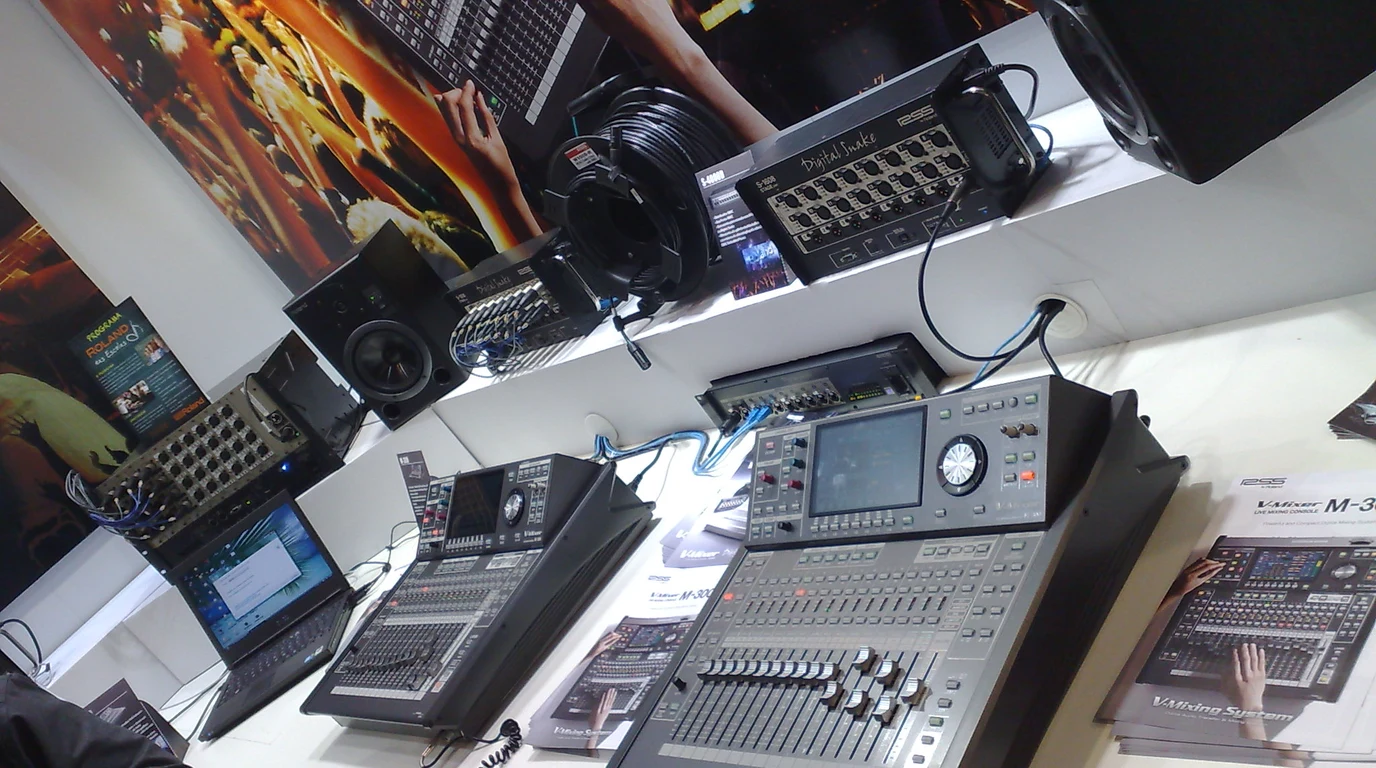
For high-performance residential multi-room sound and professional studio distribution, Audinate’s Dante dominates Audio-over-IP (AoIP) due to Layer 3 IP routability over standard off-the-shelf Gigabit Ethernet switches and seamless AES67 interoperability with sub-1ms deterministic latency. In contrast, AVB (IEEE 802.1BA / Milan) operates strictly at Layer 2 and guarantees zero packet loss through hardware bandwidth reservation, but mandates specialized, certified AVB-capable network switches. Choose Dante for universal hardware compatibility; choose AVB if deploying closed-ecosystem Biamp, Meyer Sound, or PreSonus architectures.
The Evolution from Analog Line-Level to Gigabit Audio-over-IP
In luxury smart homes and commercial hospitality environments, multi-zone distributed audio was traditionally engineered using massive centralized matrix amplifiers located in a central AV rack. Shielded 14/4 or 16/2 speaker copper wires were pulled through hundreds of feet of conduit out to ceiling speakers in each zone. This analog architecture introduced severe signal degradation: high-frequency cable capacitance loss, susceptibility to electromagnetic interference (EMI) from adjacent AC Romex runs, and inflexible zone routing that required physical rewiring to reconfigure.
Modern architectural audio completely bypasses analog matrix switchers by adopting Audio-over-IP (AoIP). By digitizing 24-bit 96kHz uncompressed PCM audio at the source and streaming it over standard Cat6 network cables directly to compact PoE++ digital amplifiers mounted locally in each room, audio quality remains bit-perfect with zero signal loss. The two primary competing network standards powering this revolution are Dante and AVB/Milan.
Layer 3 IP vs Layer 2 Time-Sensitive Networking Architecture
The fundamental technical divergence between Dante and AVB lies in their OSI model layer operation:
| Network Metric | Dante (Audinate / AES67) | AVB / Milan (IEEE 802.1BA / TSN) |
|---|---|---|
| OSI Layer Operation | Layer 3 (IP Routable via UDP/IP) | Layer 2 (Data Link Layer / MAC-level only) |
| Switch Hardware Requirements | Standard Gigabit Managed Switches (QoS / DiffServ) | Mandatory AVB-certified switches (Stream Reservation) |
| Clock Synchronization | IEEE 1588-2002 PTP v1 & v2 (Precision Time Protocol) | IEEE 802.1AS Generalized PTP (gPTP) |
| Latency Performance | Deterministic 150μs to 1.0ms (Configurable) | Deterministic < 2.0ms (Class A guaranteed) |
| Industry Hardware Adoption | Over 3,800 commercial products from 500+ manufacturers | Niche: Biamp, Meyer Sound, L-Acoustics, PreSonus |
| Subnet Traversal | Routable across VLANs and enterprise subnets | Cannot traverse Layer 3 IP routers without bridging |
PTP Clock Synchronization: Eliminating Inter-Room Phase Echo
In whole-home distributed audio, the most irritating psychoacoustic flaw is “echoing” or “flanging” between adjacent open-concept living spaces. If the audio playing in the kitchen leads the dining room speakers by merely 15 milliseconds, a person walking between the two rooms perceives a disorienting comb-filtering echo.
Both Dante and AVB resolve this through microsecond-level clock synchronization governed by the Precision Time Protocol (PTP):
- Dante Grandmaster Clock: When Dante devices boot onto an Ethernet network, an automatic election protocol designates the device with the most stable internal crystal oscillator as the Grandmaster Clock (IEEE 1588). The Grandmaster broadcasts sync packets across the subnet. Every receiving endpoint aligns its internal digital-to-analog converter (DAC) clock to within 1 microsecond of the Grandmaster.
- Guaranteed Phase Coherence: With 1-microsecond timing accuracy, speakers positioned across 12 different zones fire their acoustic waveforms in exact phase lockstep, completely eliminating audible echo across open floor plans.
Quality of Service (QoS) vs Stream Reservation Protocol (SRP)
How do network switches prevent heavy 4K security camera feeds or file downloads from interrupting sensitive audio packets?
Dante utilizes standard Layer 3 DiffServ Quality of Service (QoS). By tagging PTP clock packets with DSCP 56 (CS7) and audio data packets with DSCP 46 (EF), standard enterprise managed switches (such as Cisco CBS350, UniFi Enterprise, or Netgear AV Line) prioritize audio packets ahead of bulk TCP data in output queues. Dante operates happily alongside ordinary home internet traffic as long as basic QoS queuing is enabled.
AVB takes a more rigorous approach via the Stream Reservation Protocol (IEEE 802.1Qat). When an AVB stream is established, the network switches reserve dedicated bandwidth (up to 75% of link capacity) exclusively for that audio stream. If the network lacks available bandwidth, the connection is refused rather than allowed to glitch. While technically flawless, this requires every switch in the data path to support AVB silicon—a major cost barrier that has severely limited consumer and prosumer market adoption.
AES67 Interoperability: Bridging Dante to Open Broadcast Standards
While Dante is proprietary intellectual property owned by Audinate, its dominance is cemented by its native compliance with AES67—the open Audio-over-IP interoperability standard ratified by the Audio Engineering Society:
AES67 standardizes four core synchronization and transport primitives:
- Precision Time Protocol: Mandates IEEE 1588-2008 (PTP v2) synchronization across network nodes.
- Transport Protocol: Encapsulates uncompressed 24-bit 48kHz audio into standard Real-time Transport Protocol (RTP) packets over UDP multicast.
- Session Description Protocol (SDP): Defines stream parameters (sample rate, channel count, IP multicast address) using standardized SDP text files.
- QoS Standardization: Aligns DiffServ DSCP values to guarantee packet prioritization across enterprise switches.
By enabling AES67 mode in Dante Controller, systems integrators can route multi-channel digital audio directly between Audinate Dante endpoints, Ravenna studio broadcast nodes, and QSC Q-SYS enterprise DSP engines on the same physical network infrastructure without hardware format converters.
Network Switch Optimization: DiffServ QoS & IGMP Snooping
Deploying Dante across residential managed switches requires configuring two critical switch parameters to prevent network flooding:
First, enable IGMP Snooping (Internet Group Management Protocol) on the audio VLAN. Because multi-channel audio streams are transmitted via multicast UDP addresses, unmanaged switches treat multicast packets as broadcast frames, flooding every switch port and overwhelming low-bandwidth smart home devices. IGMP Snooping ensures multicast audio packets are delivered exclusively to physical switch ports connected to active Dante receivers.
Second, configure strict DiffServ QoS priority queues: assign DSCP 56 (PTP clock sync) to the highest-priority hardware queue (Queue 4 or Strict Priority), and assign DSCP 46 (Audio data) to high-priority Queue 3. This guarantees that large file transfers or security camera streams can never displace time-critical audio packets.
Network Redundancy: Primary and Secondary Dante Glitch-Free Switching
In high-reliability architectural audio installations, Dante supports dual-redundant network paths. High-end Dante processors feature independent Primary and Secondary Gigabit ports connected to isolated physical network switches. If a physical switch experiences power failure or an Ethernet cable is severed, Dante endpoints switch seamlessly to the redundant packet stream in zero samples with zero audible glitch or interruption.
Learn how to optimize enterprise network bandwidth for concurrent video streams in our comparative analysis on Frigate NVR vs Blue Iris: Local Surveillance. Audit camera frame telemetry in PoE Security Cameras & Frigate NVR.