⚡ Executive Infrastructure Audit: The Smart Electrical Panel
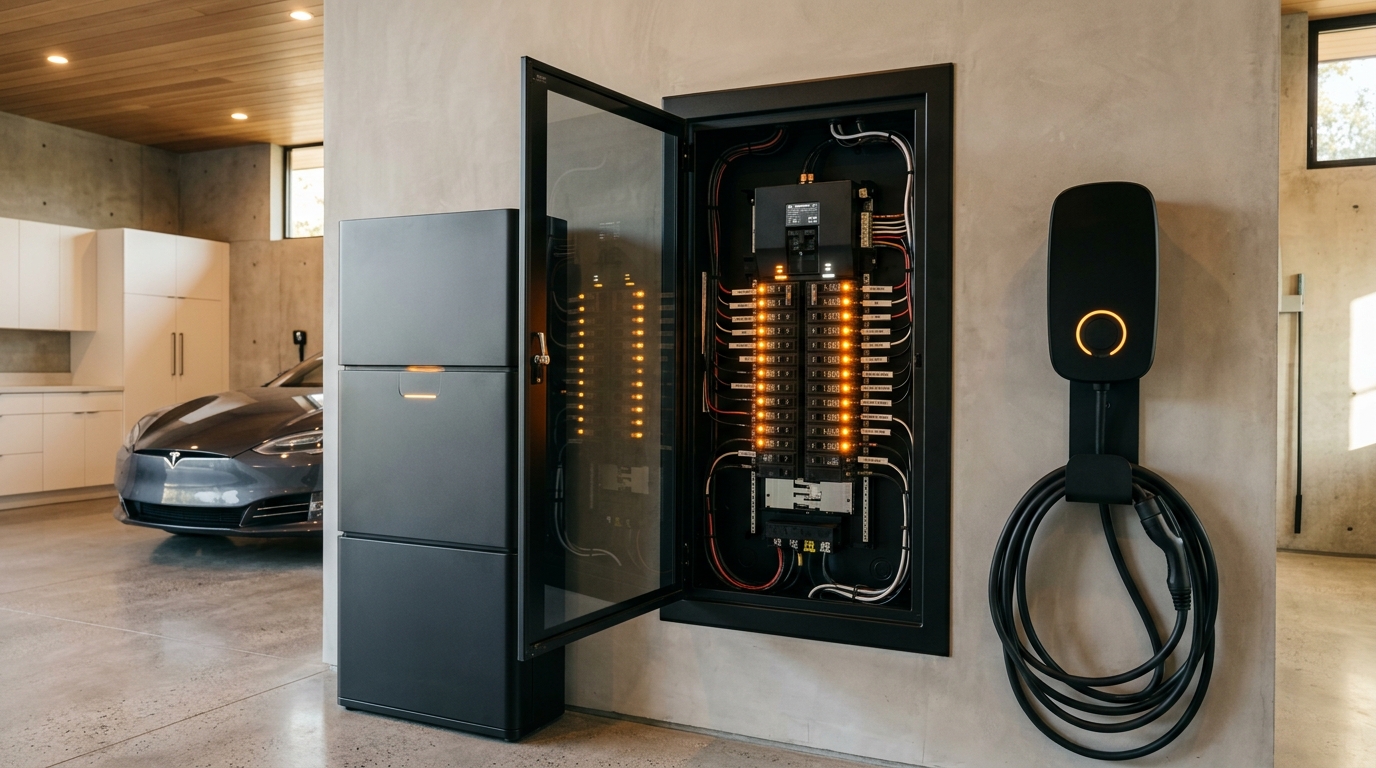
- Primary Function: Circuit-level digital metering, dynamic programmatic load-shedding, and automated microgrid synchronization.
- Service Capacity: 200A to 400A whole-home electrical service panels with 32 to 42 independently controllable smart breakers.
- Grid Resiliency: Extends residential battery backup (Tesla Powerwall 3 / Enphase 5P) by up to 40% to 60% during blackout conditions.
- EV Integration: Enables 48A/60A Level 2 EV charging on standard 200A utility service without expensive 400A utility transformer upgrades.
- Protocol Interconnect: Local Ethernet / RS-485 Modbus integration into Home Assistant and energy management controllers.
For nearly a century, the residential electrical breaker panel remained an analog, passive enclosure of mechanical bi-metallic switches designed strictly for overcurrent protection. In the modern electrified residence—burdened by heat pumps, induction ranges, bidirectional electric vehicles, and battery storage arrays—this analog panel represents the single biggest bottleneck in home automation.
When a standard home experiences an unexpected utility grid blackout, residential batteries dump stored kilowatt-hours indiscriminately across every circuit in the house unless manual physical sub-panels were pre-wired. In 2026, smart electrical panels (led by SPAN, Schneider Electric, and Leviton) digitize the home’s electrical backbone, transforming every breaker into a remotely metering, programmable solid-state controller.
Dynamic Load Shedding: How Smart Panels Avoid $10,000 400A Utility Upgrades
One of the most immediate commercial justifications for a smart electrical panel is utility service avoidance. In many suburban municipalities, adding two Level 2 EV chargers (48A each) and a heat pump requires upgrading the municipal electrical service entrance from 200A to 400A. Between utility engineering fees, trenching, and utility transformer replacements, this physical upgrade routinely exceeds $8,000 to $12,000.
A smart panel eliminates this expense through real-time algorithmic load-shedding. When the smart panel detects total home electrical draw approaching 160A (80% of continuous 200A capacity), it programmatically throttles the EV charger circuit or pauses the water heater for 20 minutes while the kitchen range is in use. Total capacity is never breached, meeting NEC 220 load calculation exemptions while keeping installation costs contained.
Schneider Smart Electrical Panel vs. SPAN & Leviton: Whole-Home Automation Comparison
| Feature / Spec | SPAN Panel Gen 2 | Schneider Square D Pulse | Leviton Smart Load Center |
|---|---|---|---|
| Hardware Architecture | Complete solid-state smart panel | Modular smart relays on busbar | Smart breaker modules in standard load center |
| Controlled Circuits | 32 circuits (All smart included) | Up to 42 circuits (Modular add-on) | Up to 42 circuits (Breaker dependent) |
| Local API / Home Assistant | Local REST API / Real-time WebSocket | Modbus TCP / Wiser Gateway | Cloud API (Local bridge required) |
| Solar & Storage Integration | Native Tesla, Enphase, SolarEdge pairing | Native Schneider Qmerit solar ecosystem | Third-party ATS pairing required |
| MSRP (Hardware Only) | $3,500 – $4,500 | $2,800 – $3,600 | $1,800 – $2,800 (Panel + Breakers) |
3. The Automation Orchestration Layer
The true power of a smart electrical panel unlocks when integrated into a centralized zero-cloud Home Assistant automation engine. By polling the SPAN local API every 2 seconds, Home Assistant dynamically monitors electrical frequency and grid health.
When utility power drops, Home Assistant automatically commands the smart panel to transition to “Blackout Profile”: non-essential sub-circuits (guest rooms, wine coolers, basement heat pumps) are tripped offline instantly. Meanwhile, vital circuits—such as server racks powering your PoE security cameras and Frigate NVR surveillance infrastructure, medical refrigeration, and water pressure pumps—remain fully energized for days on standard residential battery storage.
Frequently Asked Questions (Smart Panel Architecture)
The primary architectural difference is modular retrofit vs. integrated solid-state engineering. The Schneider Square D smart panel ecosystem utilizes modular Wiser Energy CT monitors and plug-on smart relays inside traditional QO/Homeline load centers ($2,000–$3,500 installed). SPAN replaces the entire load center with 32 solid-state, software-controllable relays built directly into the backplane ($6,500–$8,500 installed), enabling complete circuit-level shedding without external modules.
Yes. A smart electrical panel replaces your existing standard main distribution panel or integrates into existing panels as a subpanel or modular CT retrofit. A licensed electrical contractor removes the old panel and splices existing branch circuit wiring into the smart panel enclosure, typically completing the retrofit in 6 to 8 hours.
Yes. Smart electrical panels utilize standard thermal-magnetic mechanical trip mechanisms for safety. If an electrical short or overload occurs, the breaker physically trips in milliseconds, completely independent of software, cloud connectivity, or home Wi-Fi networks.
Yes. Under NEC 220.87 (determining existing loads) and NEC 625.42 (EV energy management systems), smart panels monitor total whole-home feeder load in real-time. If total consumption nears the 200A limit, the panel dynamically throttles the EV charger or sheds heat pump auxiliary heat, legally preventing the need for costly $8,000–$15,000 utility transformer and service upgrades.
Yes. SPAN is an open-architecture energy platform that natively integrates with Tesla Powerwall (2, +, and 3), Enphase IQ Batteries, SolarEdge Home Battery, and standard grid-tied inverter systems, providing granular circuit-level control regardless of battery brand.