
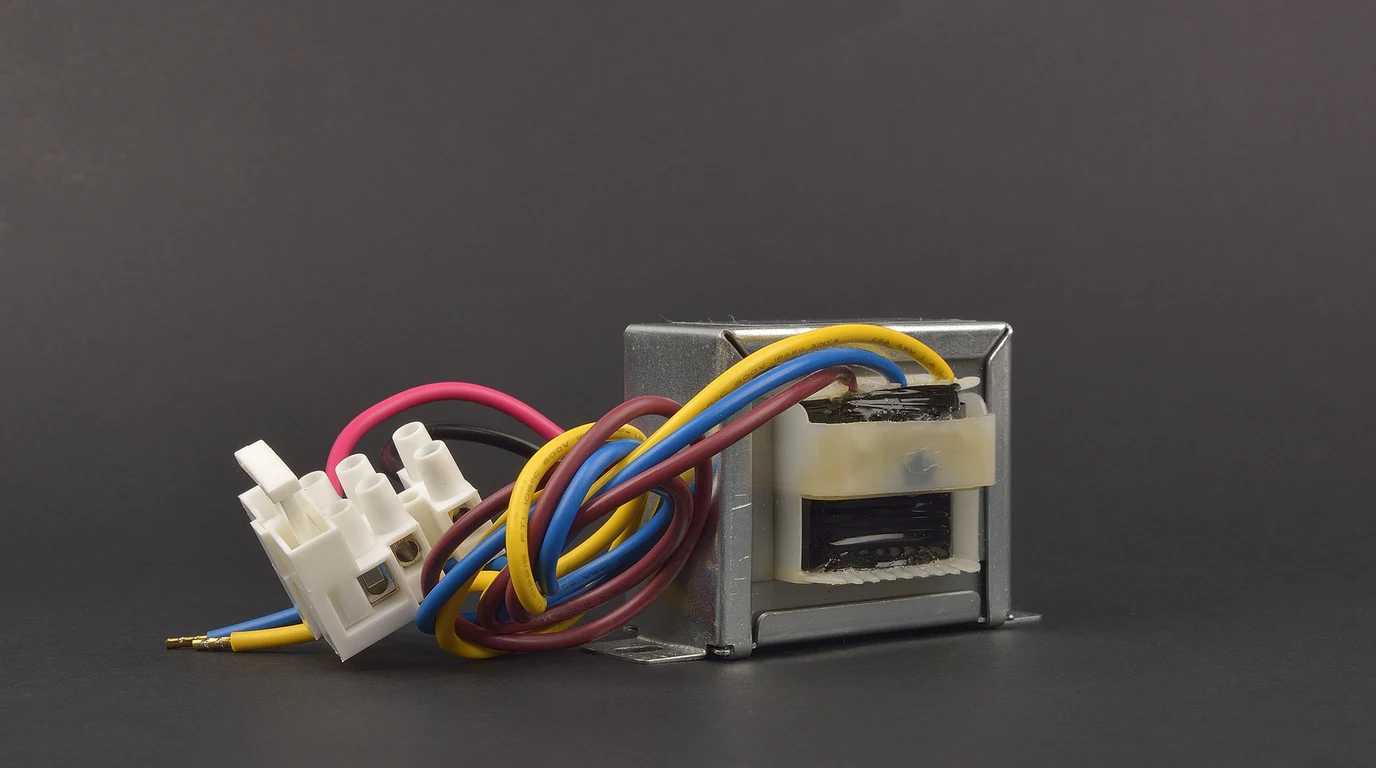
- Stray Magnetic Flux Radiation Differential: Toroidal transformers utilize a continuous grain-oriented silicon steel doughnut core wound symmetrically with copper wire. This closed magnetic loop contains 90% to 95% of the magnetic flux within the core, radiating up to 8 to 10 times less stray electromagnetic hum than conventional rectangular EI-laminated transformers, making toroids essential adjacent to sensitive phono stages and analog preamps.
- Power Density & Efficiency Math: Toroids deliver approximately 95% electrical efficiency and a 50% smaller physical footprint and weight compared to an EI transformer of equivalent VA (Volt-Ampere) rating, allowing multi-channel home theater amplifiers to deliver massive transient headroom in compact 3U/4U chassis.
- The Vulnerability to DC Mains Offset: The continuous gapless core of a toroidal transformer saturates rapidly in the presence of minor DC voltage offsets (as little as 100 to 500 mV DC caused by hair dryers, LED dimmers, or half-wave rectifiers on the home AC grid). When saturated, toroidal cores emit a mechanical buzzing hum and run hot. EI transformers possess small mechanical air gaps between the E and I laminations, making them significantly more tolerant of dirty DC offset.
- High Inrush Current & Circuit Breaker Tripping: Toroids have near-zero primary winding resistance and high core permeability, generating instantaneous inrush currents up to 20 to 40 times their nominal rated current upon power-up, requiring dedicated thermistor or relay-based soft-start circuits to prevent nuisance breaker tripping in high-end AV racks.
What Is the Primary Difference Between Toroidal and EI Power Transformers?
The primary difference between toroidal and EI transformers is their magnetic core geometry: toroidal transformers utilize a continuous circular core that confines magnetic flux and eliminates stray electromagnetic hum, offering higher power density and efficiency, while traditional EI transformers use stacked E-and-I shaped metal laminations with natural air gaps that provide superior resistance to DC mains offset at the cost of higher stray magnetic leakage.
At the foundation of every reference-grade audio component—from flagship multi-channel home theater power amplifiers to esoteric vinyl phono preamplifiers—lies the power supply. While modern switch-mode power supplies (SMPS) dominate consumer electronics due to their low cost and lightweight design, high-end high-fidelity audio engineering remains fiercely loyal to linear power supplies built around massive copper-wound iron transformers.
Linear power supplies generate zero high-frequency switching hash (which typically radiates at 50 kHz to 500 kHz in cheap SMPS designs), preserving an pristine black noise floor. However, selecting the optimal transformer core geometry requires custom AV designers to weigh the electromagnetic shielding benefits of toroidal cores against the physical durability and DC-offset resilience of traditional EI laminations.
Engineering Specification Matrix: Toroidal vs Traditional EI Laminated Transformers
Comparing magnetic properties, thermal performance, and audio circuit interactions between transformer core topologies:
| Engineering Parameter | Toroidal Power Transformer | EI-Laminated Transformer | AV Performance Impact |
|---|---|---|---|
| Core Construction | Continuous Circular Strip (Gapless Silicon Steel) | Stacked Stamped “E” and “I” Silicon Plates | Dictates magnetic loop containment |
| Stray Magnetic Field (Flux Leakage) | Extremely Low (10% of EI Equivalent) | High (Radiates out corners and air gaps) | Toroids prevent 60Hz magnetic induction into audio circuits |
| Electrical Efficiency | 92% – 97% Full Load Efficiency | 80% – 88% Full Load Efficiency | Toroids run significantly cooler under load |
| Physical Size & Weight per VA | Compact & Low Profile (50% lighter) | Bulky & Heavy Rectangular Chassis | Toroids allow high-power multi-channel amp designs |
| Susceptibility to DC Mains Offset | Extremely Sensitive (Saturates at <300mV DC) | High Tolerance (Air gaps resist magnetic saturation) | Toroids can buzz mechanically on dirty AC power |
| Power-On Inrush Current Spike | Severe (20x to 40x Rated Primary Current) | Moderate (5x to 10x Rated Current) | Toroids demand soft-start relay protection |
Magnetic Flux Leakage: Protecting Sensitive Low-Level Audio Signals
The primary reason high-end audio manufacturers favor toroidal transformers is their near-total containment of electromagnetic flux:
- The Circular Core Shielding Effect: In an EI transformer, the copper wire is wound around a central bobbin, leaving the outer stamped steel laminations exposed. Magnetic flux lines inevitably leak across the corners and air gaps between the E and I plates, creating an invisible, pulsating 60 Hz magnetic bubble around the transformer. If a delicate preamplifier circuit board or turntable phono stage is located within 12 inches of an unshielded EI transformer, this stray field induces audible 60 Hz hum directly into the copper audio traces.
- Toroidal Self-Shielding: A toroidal core is wound uniformly around its entire circumference. Because the primary and secondary windings completely envelope the doughnut core, the magnetic field is forced to travel in a continuous circular loop inside the high-permeability grain-oriented steel. Stray magnetic radiation drops by over 85% to 90% compared to an EI transformer. High-end manufacturers enclose the toroid in a potted metal bell housing with Mu-metal shielding to achieve an absolute black noise floor.
The DC Offset Nightmare: Why Toroids Mechanically Buzz on Clean AC Lines
Despite their technical superiority, toroidal transformers possess a notorious operational vulnerability: mechanical core saturation caused by DC offset on the AC mains.
In a pure electrical world, AC power is a symmetrical sinusoidal wave with zero DC component. However, in modern homes, non-linear asymmetric electrical loads—such as hair dryers operated on low heat (which use a single diode to clip half the AC wave), inexpensive LED dimmers, and microwave ovens—draw power asymmetrically from the AC grid. This injects an unwanted direct current (DC) voltage offset (typically 100 mV to 1,500 mV DC) into your home’s 120V wall outlets:
- The Gapless Saturation Mechanism: Because a toroidal core has no physical air gaps, it possesses extremely low magnetic reluctance. Even a tiny DC current passing through the primary winding creates a static magnetic bias that pushes the high-permeability core into magnetic saturation on one half of the AC cycle.
- Acoustic Core Whine: When the core saturates, the primary winding impedance collapses, drawing massive current spikes. The laminated steel tape inside the core experiences severe magnetostriction (microscopic mechanical expansion and contraction), causing the physical transformer to emit an audible, mechanical 120 Hz buzzing sound directly from the metal amplifier chassis—even when the speakers are completely muted!
- The EI Transformer Resilience: In an EI transformer, the microscopic mechanical joints where the E-plates meet the I-plates act as small distributed air gaps. These air gaps introduce magnetic reluctance that prevents small DC voltages from driving the core into saturation, allowing EI transformers to remain mechanically silent even on highly polluted electrical grids.
Taming the Toroid: Soft-Start Relays and DC Blockers
To capture the ultra-low noise floor and massive dynamic transient power of toroidal transformers while eliminating their operational vulnerabilities, custom systems engineers implement two essential power protection protocols:
- Active Soft-Start Protection:
Because high-power toroidal transformers (800 VA to 2,000 VA) generate massive inrush currents upon cold-start, plugging three multi-channel power amplifiers into an AV rack can instantly trip a 15A or 20A residential circuit breaker. Professional audio amplifiers incorporate an active soft-start circuit: upon power-up, primary current is directed through heavy-duty negative temperature coefficient (NTC) power thermistors to limit inrush current. Once the massive filter capacitor bank is charged (typically after 500 to 800 milliseconds), a heavy-duty relay engages, bypassing the thermistors and delivering unconstrained line power. - Mains DC Blockers (DC Traps):
If your high-end toroidal amplifier emits an audible mechanical hum from its chassis, the problem is not a defective transformer; it is DC offset on your home’s electrical wiring. Installing a dedicated Mains DC Blocker (a bridge rectifier paired with high-capacity non-polar electrolytic capacitors placed in series with the AC line) transparently strips up to 2.5 Volts of unwanted DC voltage while allowing clean, undistorted AC sine waves to pass unimpeded, instantly restoring whisper-quiet mechanical operation.
For high-end audio amplification and reference home theater racks, the toroidal power transformer is the definitive engineering standard. Its compact circular form factor, exceptional electrical efficiency, and 90% reduction in stray magnetic flux leakage prevent electromagnetic hum from corrupting delicate analog audio paths. However, systems designers must account for toroidal physics: ensure your power amplifiers feature active relay soft-start circuits to tame primary inrush current, and deploy an isolated Online Double-Conversion UPS or dedicated DC blocker to eliminate the mechanical buzzing caused by asymmetrical mains DC offset.
For companion clean power and equipment protection strategies, study our engineering analysis on Online Double-Conversion UPS vs Line-Interactive AV, and review our automated infrastructure guide on Smart Electrical Panels: SPAN vs Schneider vs Leviton.
Explore our engineering teardown on Acoustic Bass Traps vs DSP EQ: Room Mode Decay Math.
Explore our engineering teardown on Online Double-Conversion vs Line-Interactive UPS TCO.